
On this page
About this place.
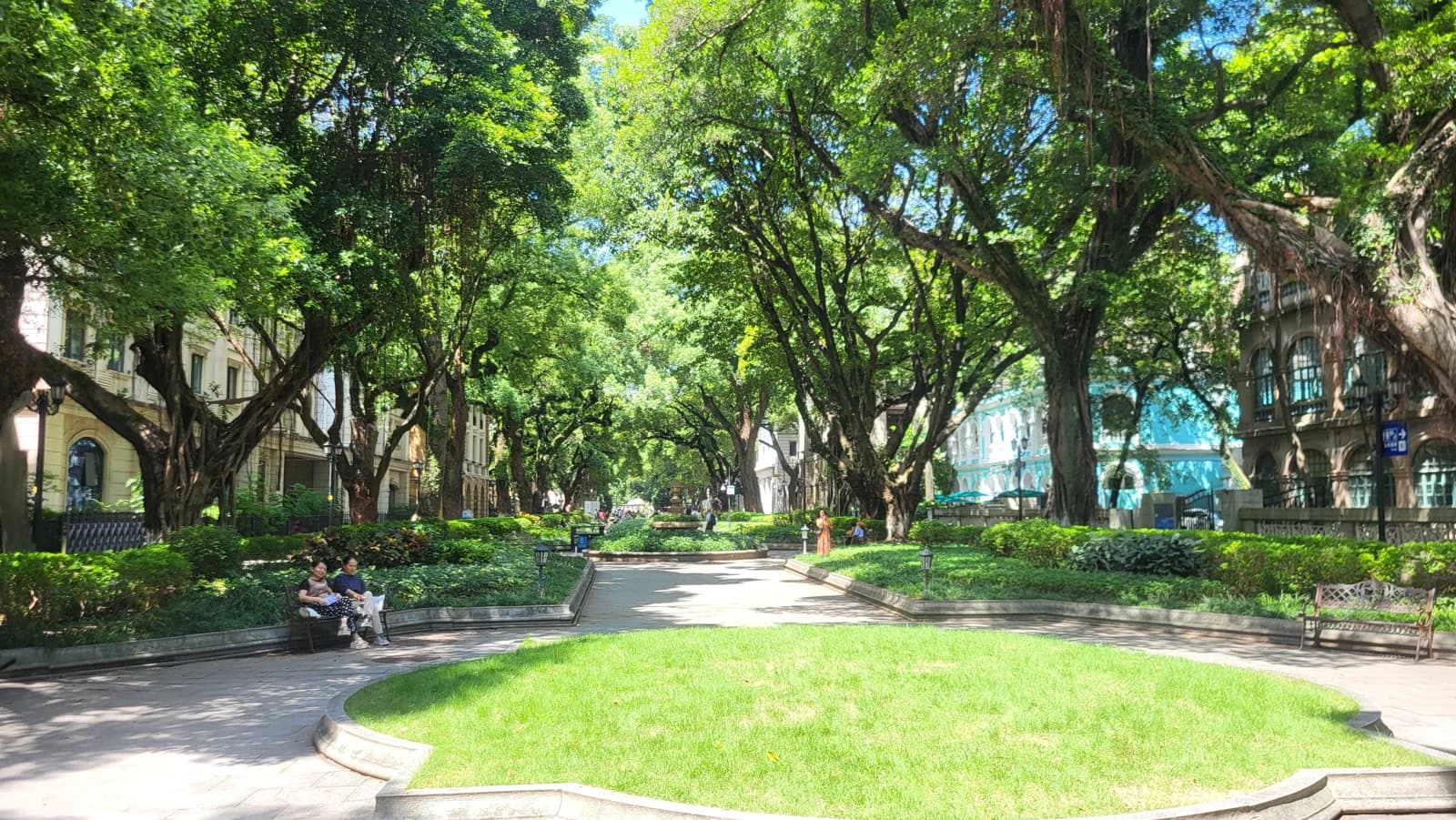
Shamian's interest lies in the relationship between its street layout, mature trees and buildings shaped by Guangzhou's history of international contact. Read the neighbourhood as a connected streetscape, with several architectural traditions visible within the same island setting.
About this note.
- This note covers the place's setting, history and architectural character.
- Individual venue entry and visitor arrangements are checked separately for the travel date.
Caption & source
An island within Guangzhou
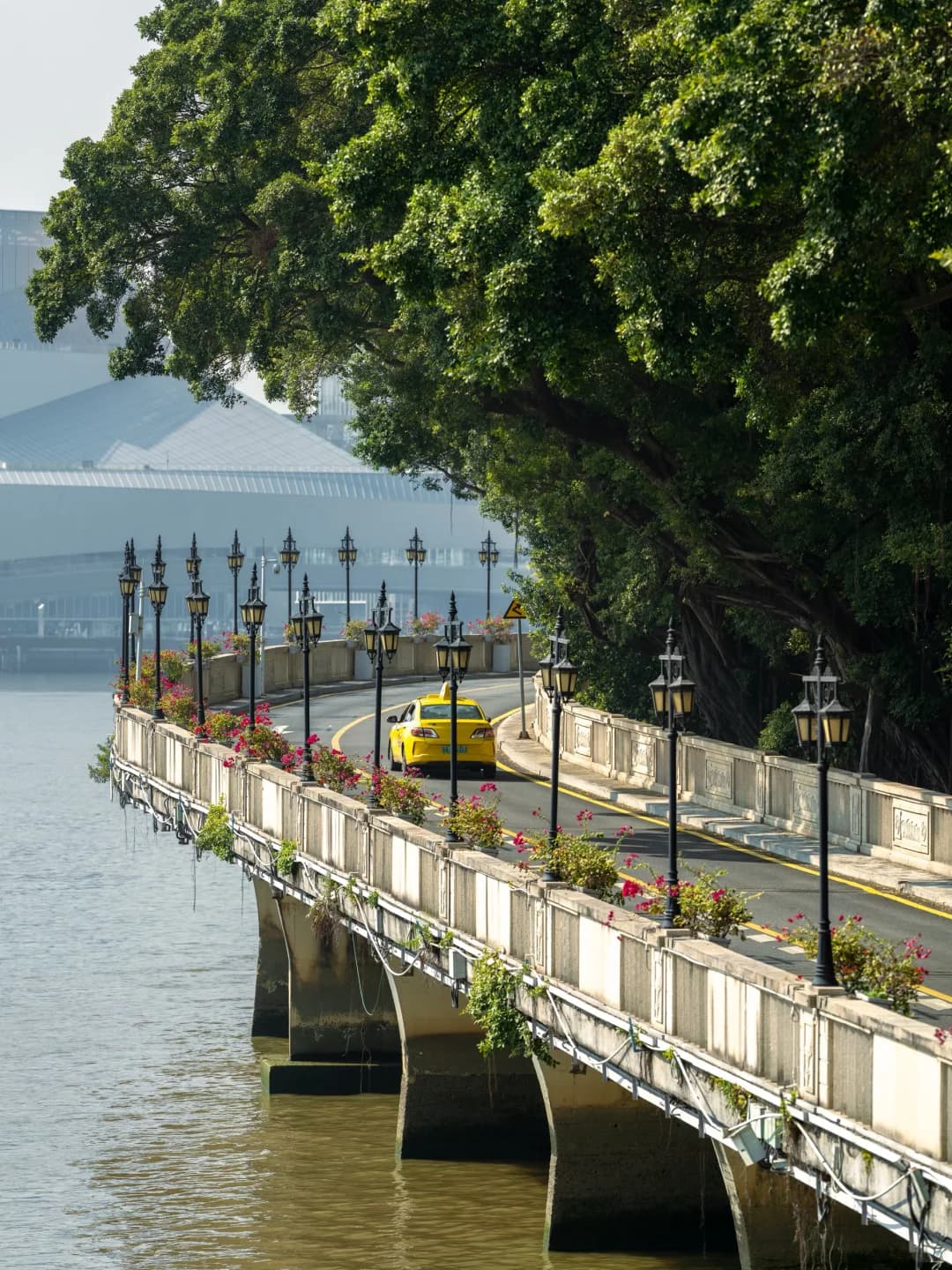
Shamian belongs to Liwan district. Baietan, a reach of the Pearl River, lies to its south, while Shaji Chong borders the neighbourhood to the north. This waterside position is part of the setting of the streets and buildings, rather than a separate excursion added to the visit.
Caption & source
Sources for this section
The history behind the facades
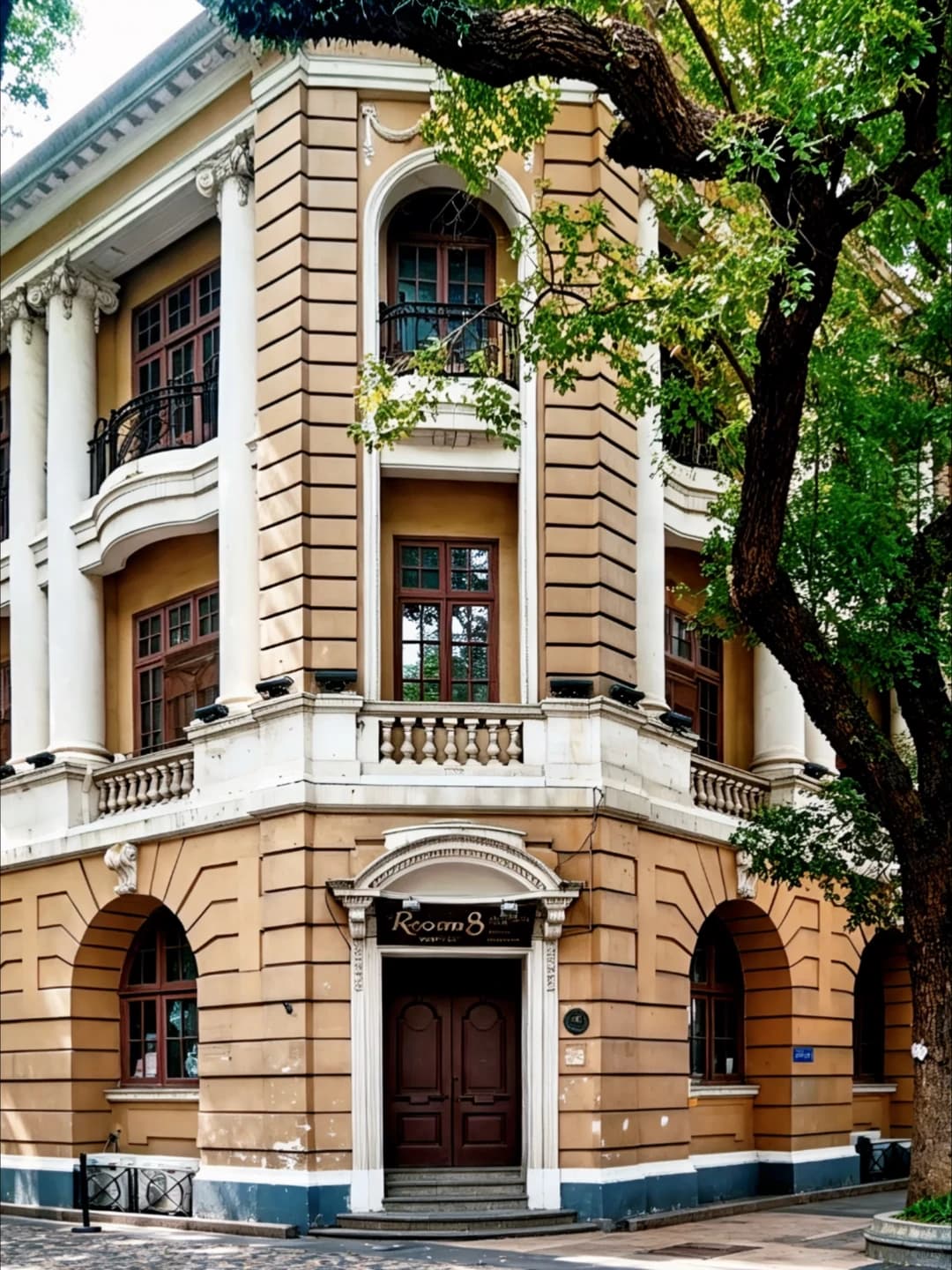
The former British and French concessions are an essential part of Shamian's history. The district's account connects the surviving avenues and buildings with that past. The neighbourhood therefore offers a way to consider Guangzhou's modern international connections through its physical streetscape.
Caption & source
Sources for this section
Several architectural languages, one streetscape
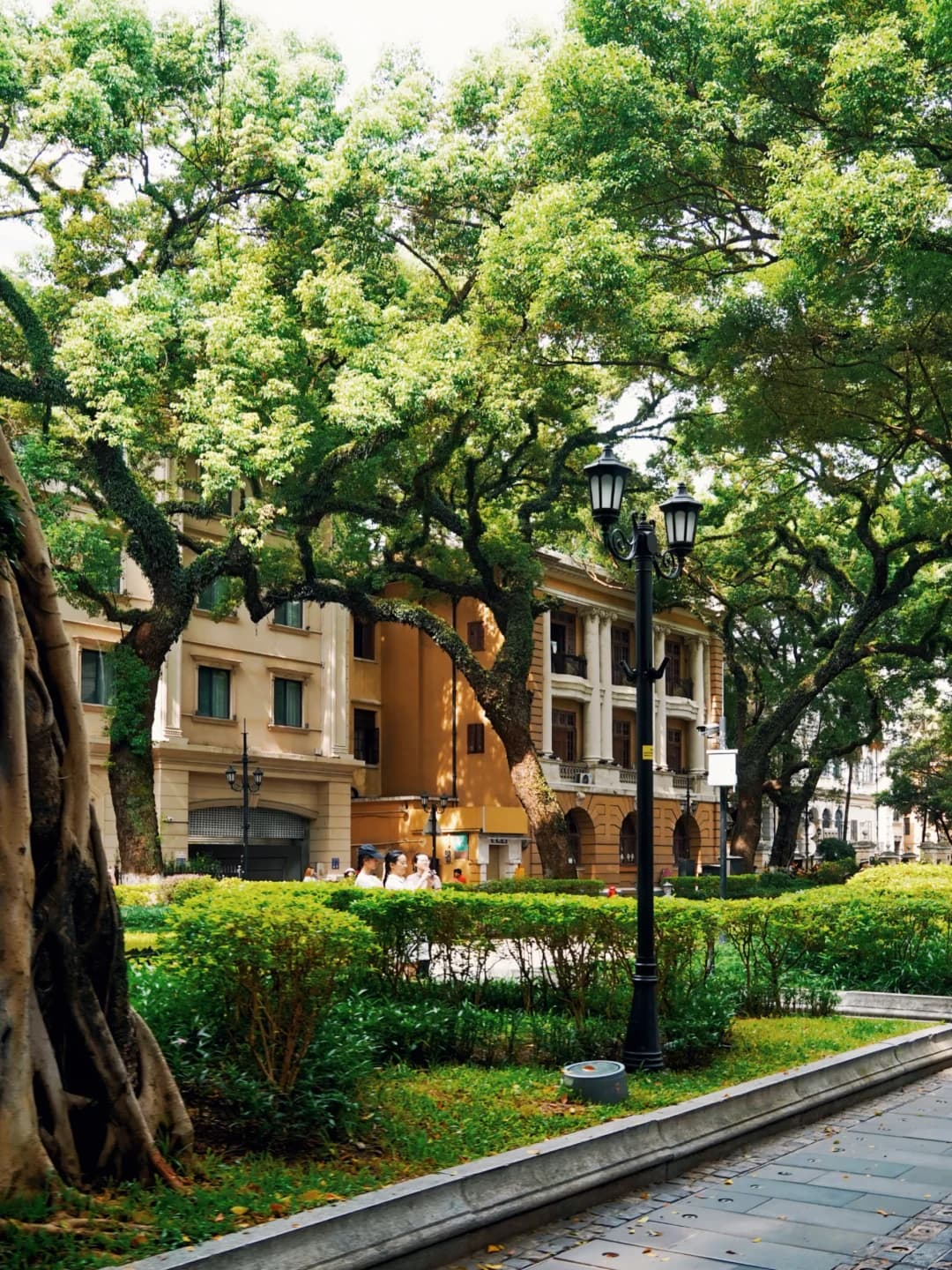
Local government descriptions identify neoclassical, neo-Baroque, arcaded and Gothic-inspired buildings, alongside adaptations to local climate and Chinese architectural influences. The heritage account also records broad roads and mature trees. These details give the walk more to notice than individual landmark facades alone.
Caption & source
Sources & checks.
These identified sources support the facts in this note. Check dates show when each source was reviewed.
- Shamian Island — Guangzhou International Neighborhoods
Foreign Affairs Office of Guangzhou Municipal Government / GDToday · Checked
Liwan District identity; Pearl River/Baietan and Shaji Chong setting; historical international institutions and surviving architectural context. No current business, dining or consular-service claim is imported.
- Shamian Island — Tourist Attractions
Liwan District People's Government of Guangzhou Municipality · Checked
Former British and French concession context, historical avenues, trees and European architectural styles. Exact concession dates and building counts are not used.
- 沙面岛整治提升情况
Liwan District Housing, Construction and Landscaping Bureau · Checked
Architectural styles including neoclassical, neo-Baroque, arcaded and Gothic-inspired forms; adaptation to Guangzhou and Chinese architectural influences. Upgrade proposals are not represented as verified current visitor facilities.
- 沙面建筑群
Liwan District Culture, Radio, Television, Tourism and Sports Bureau · Checked
The surviving architectural ensemble, broad roads, mature trees and connection with Guangzhou's modern and concession history. No numerical heritage inventory is repeated.
Find the pace that suits you.
Tell us your dates, interests and who’s travelling. Start your enquiry with the cities in this note.
Plan my tripReview your answers, then send your enquiry to hello@matchstickchina.com. A submission does not confirm availability, prices or a booking.