

Kashgar · City culture
An oasis city of streets and skilled hands.
Kashgar’s cultural life is legible at street level. Mosque courtyards, residential lanes, workshops and markets give different forms to gathering, work and exchange. Copperwork, pottery, carved wood and musical instruments connect the city’s visible patterns with the skills needed to make everyday objects.
The old city also carries the effects of rebuilding and changing uses. Looking at public streets alongside workshops and residential thresholds reveals a living urban fabric. Beyond Kashgar, the highland lakes of Akto County in Kizilsu offer a separate regional landscape: they belong to the Pamir surroundings, outside the city.
The city and its Pamir surroundings.
Keep the old-city landmarks together in your reading, then explore Baisha and Karakul as distinct mountain-lake landscapes in neighbouring Kizilsu.
Inside this city guide.
Browse city architecture and craft, or turn to the clearly marked Pamir surroundings. Further chapters explore more neighbourhoods, cultural places and landscapes through collected travel notebooks.
Kashgar · Courtyard & prayer-hall architecture
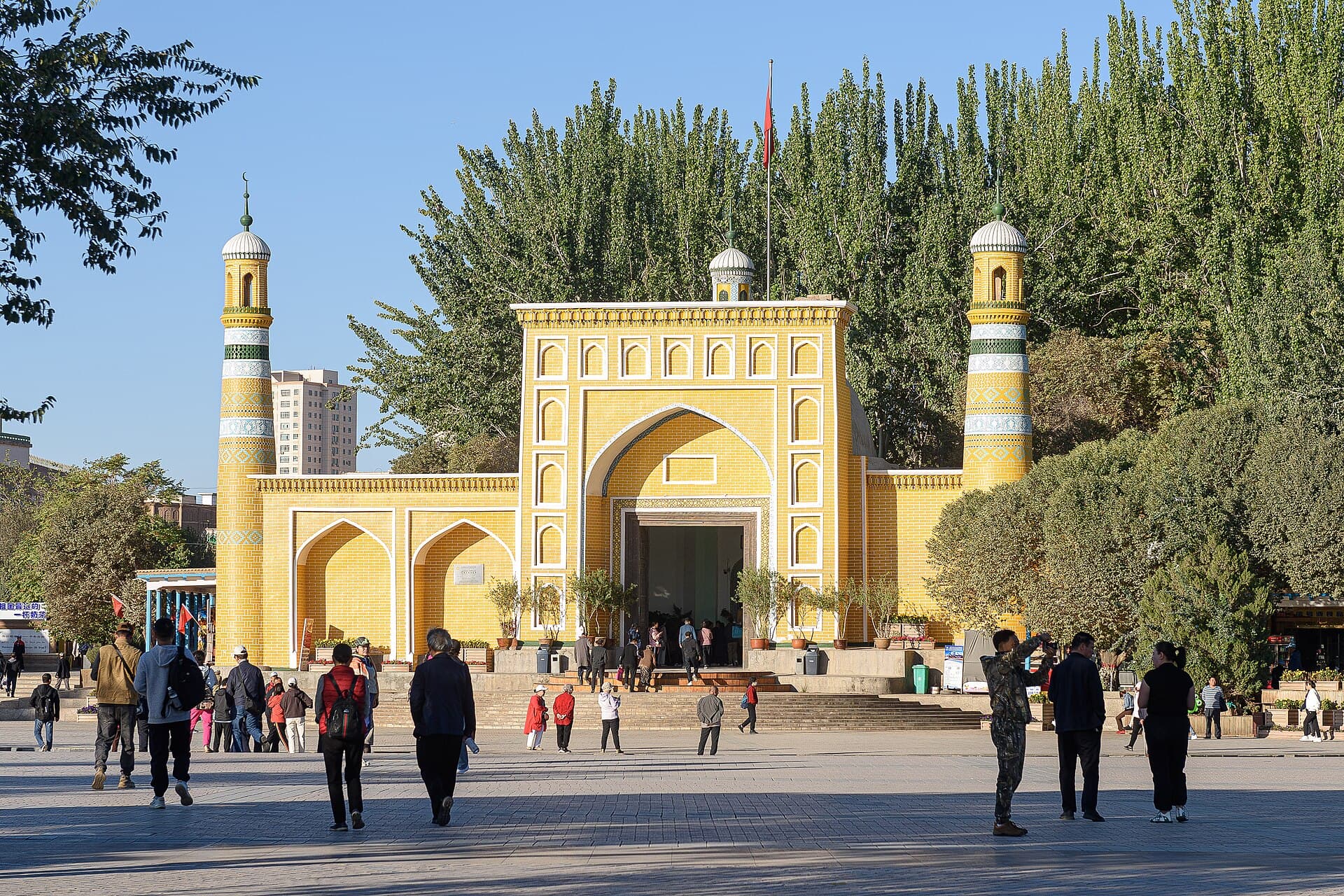
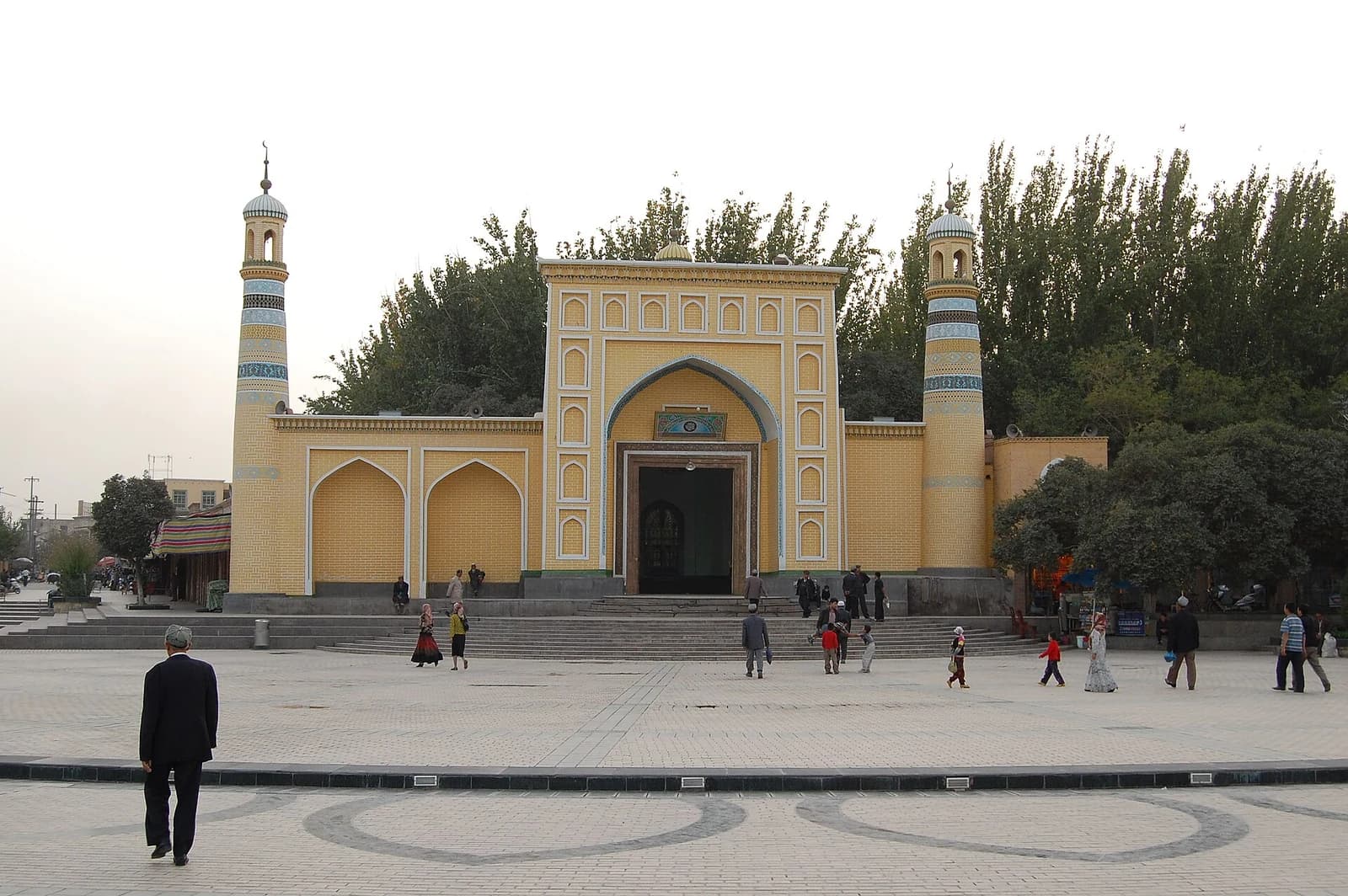
Id Kah Mosque
A recognisable entrance leads into a larger composition of courtyard, halls and carefully repeated architectural details.
Caption & source
Look beyond the entrance facade
Id Kah Mosque stands west of Id Kah Square in central Kashgar, with a foundation dated to 1442. Its complex includes the entrance building, courtyard, prayer halls and associated spaces. Rows of carved wooden columns are an important feature of the halls and corridors.
Read the change from the open square to the enclosure and then to the repeated columns. This sequence gives the building depth beyond its familiar yellow facade. Looking at proportion, shade and craftsmanship helps explain how the architecture creates spaces for gathering and worship.
Sources & photograph credits
Background and reading notes adapted from the sources below. Photographs are credited to their original authors.
- 艾提尕尔清真寺简介
Kashgar Prefecture Administrative Office · Checked
Central location, 1442 foundation, entrance, courtyard, prayer halls, corridors and carved wooden columns. Spatial interpretation is editorial.
Kashgar · Copper, pottery, wood & instruments
Handicraft Street
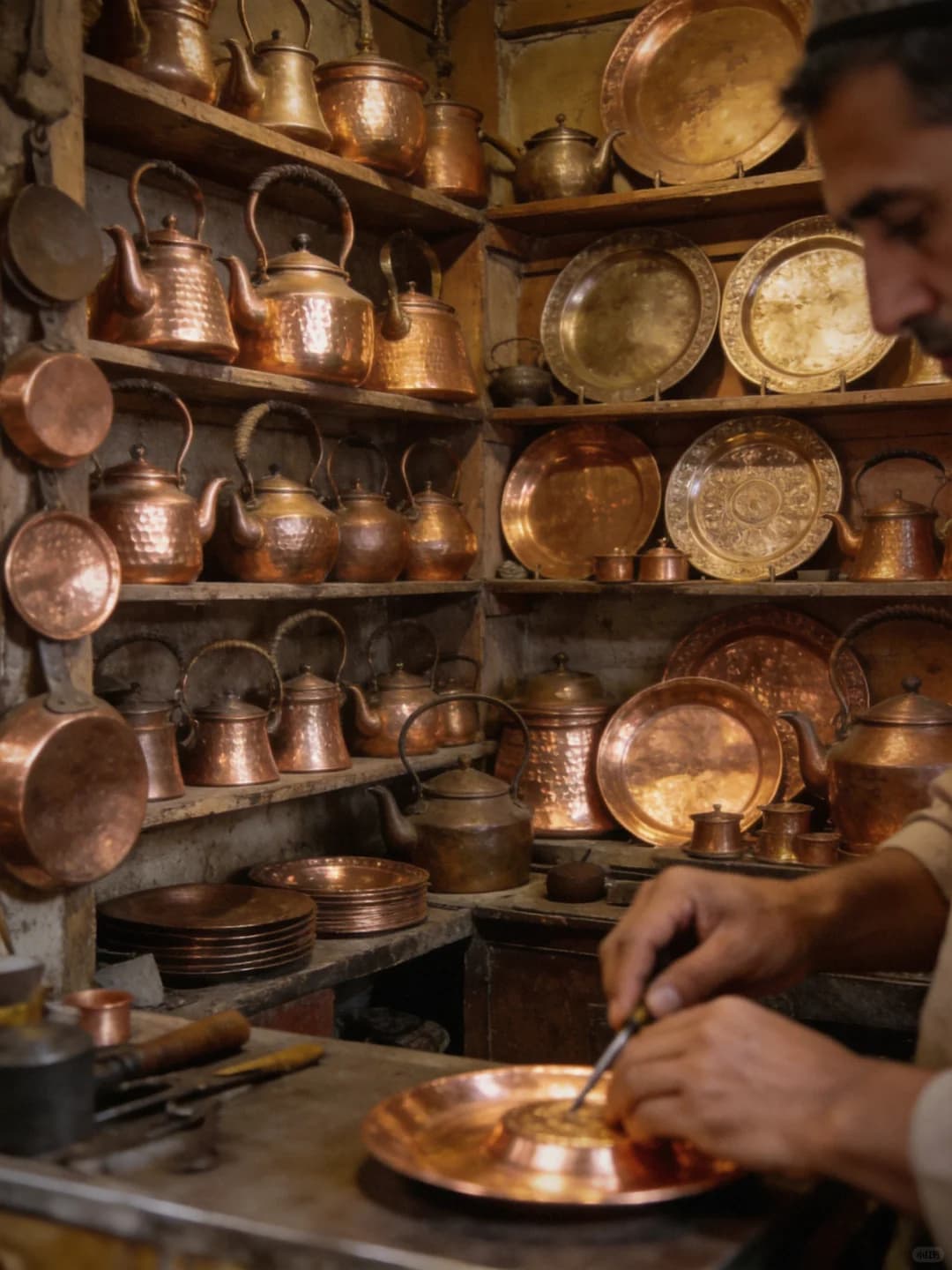
The old city’s craft streets make the connection between an object and the work of making it visible.
Caption & source
Follow the making, not only the pattern
Kashgar’s old-city craft traditions include copperwork, pottery, wooden objects and musical instruments. Handicraft Street brings workshops and finished goods into close contact. A copper vessel, for example, carries the accumulated marks of repeated shaping, joining and surface work.
Look at a rim, a handle or a change in texture before taking in the whole display. Small details reveal how usefulness and decoration meet. Where work is visible, the tools and partly finished objects add a different layer of understanding from the finished pieces arranged at the front of a shop.
Sources & photograph credits
Background and reading notes adapted from the sources below. Photographs are credited to their original authors.
- 喀什古城景区:“非遗+旅游”为文旅融合注入活力
Kashgar Prefecture Administrative Office — Kashgar Daily · Checked
Handicraft Street, copper making and the old city’s pottery, woodwork and instrument-making traditions. Suggestions for looking at tools and object details are editorial.
Kashgar · Lanes, thresholds & changing urban fabric
Kashgar old city
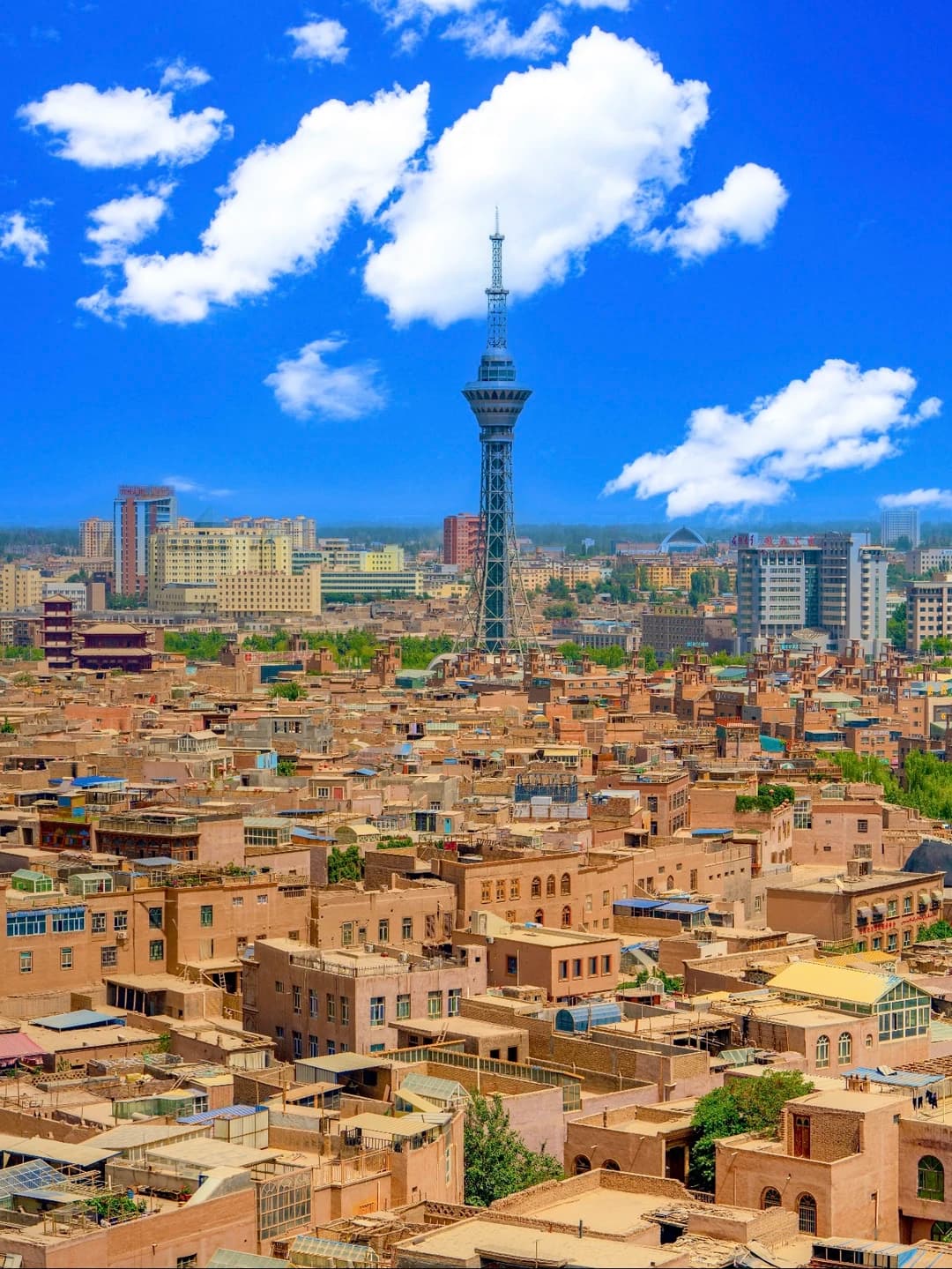
Read the old city through the transition from public lanes to shopfronts, workshops and residential thresholds.
Caption & source
A street pattern with a changing fabric
Kashgar’s old city is known for its close network of lanes and courtyard houses. Substantial rebuilding began in 2009, so its present appearance includes renewed structures and infrastructure as well as inherited patterns and craft traditions. The streets are best read as a changing urban environment.
Notice where a busy public lane narrows, where a shop opens onto the street and where a doorway marks a more private space. These transitions reveal different uses within the same neighbourhood. Attention to thresholds and street relationships gives the walk a clearer focus than looking only for an apparently timeless scene.
Sources & photograph credits
Background and reading notes adapted from the sources below. Photographs are credited to their original authors.
- 喀什:老城改造让千年古城绽新颜
National Ethnic Affairs Commission of China · Checked
Old-city lane and residential patterns and the major rebuilding programme beginning in 2009. Suggestions for reading public and private thresholds are editorial.
- 非遗之活带动旅游之火
Kashgar Prefecture Administrative Office · Checked
Old-city craft traditions including food, wooden objects, pottery, instruments, hats and clothing.
Kashgar · Market culture & oasis exchange
Kashgar bazaar
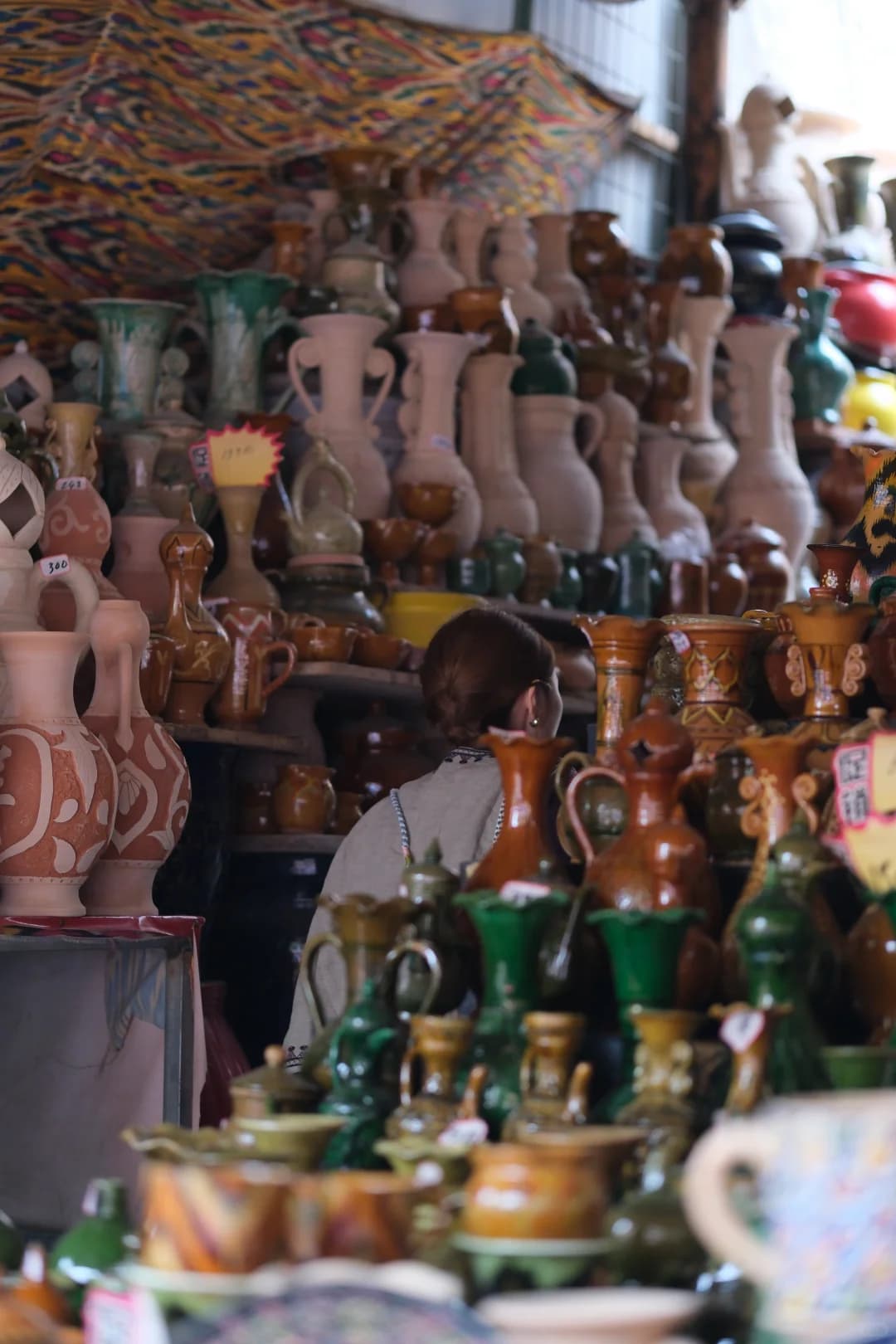
Bazaar means market: its cultural interest lies in the goods, exchanges and social life that connect an oasis with its surroundings.
Caption & source
Read the market through its everyday uses
Bazaars are part of a wider market tradition across southern Xinjiang. They connect farm produce, household goods, food and craft with places of meeting and conversation. Kashgar’s markets include different kinds of trade, so the word bazaar describes a cultural practice as well as a shopping destination.
Notice how goods are grouped and how a practical item is handled or displayed. A container, a textile or a pile of produce points toward the work and households beyond the stall. This everyday exchange helps explain the market’s place in oasis life without reducing it to a single souvenir scene.
Sources & photograph credits
Background and reading notes adapted from the sources below. Photographs are credited to their original authors.
- 南疆:冬日赶“巴扎”
Kashgar Prefecture Administrative Office — Xinhua · Checked
The meaning of bazaar, southern Xinjiang’s market culture, exchange of goods and social gathering. This chapter describes market culture rather than assigning a specific market address or weekly schedule.
- 赶集!打开手机就有“巴扎”
Kashgar Prefecture Administrative Office — Xinhua · Checked
Markets in Kashgar and surrounding settlements as places for produce, crafts, household goods and community exchange. Object-based viewing suggestions are editorial.
Kashgar · Pamir surroundings · Akto, Kizilsu
Baisha Lake
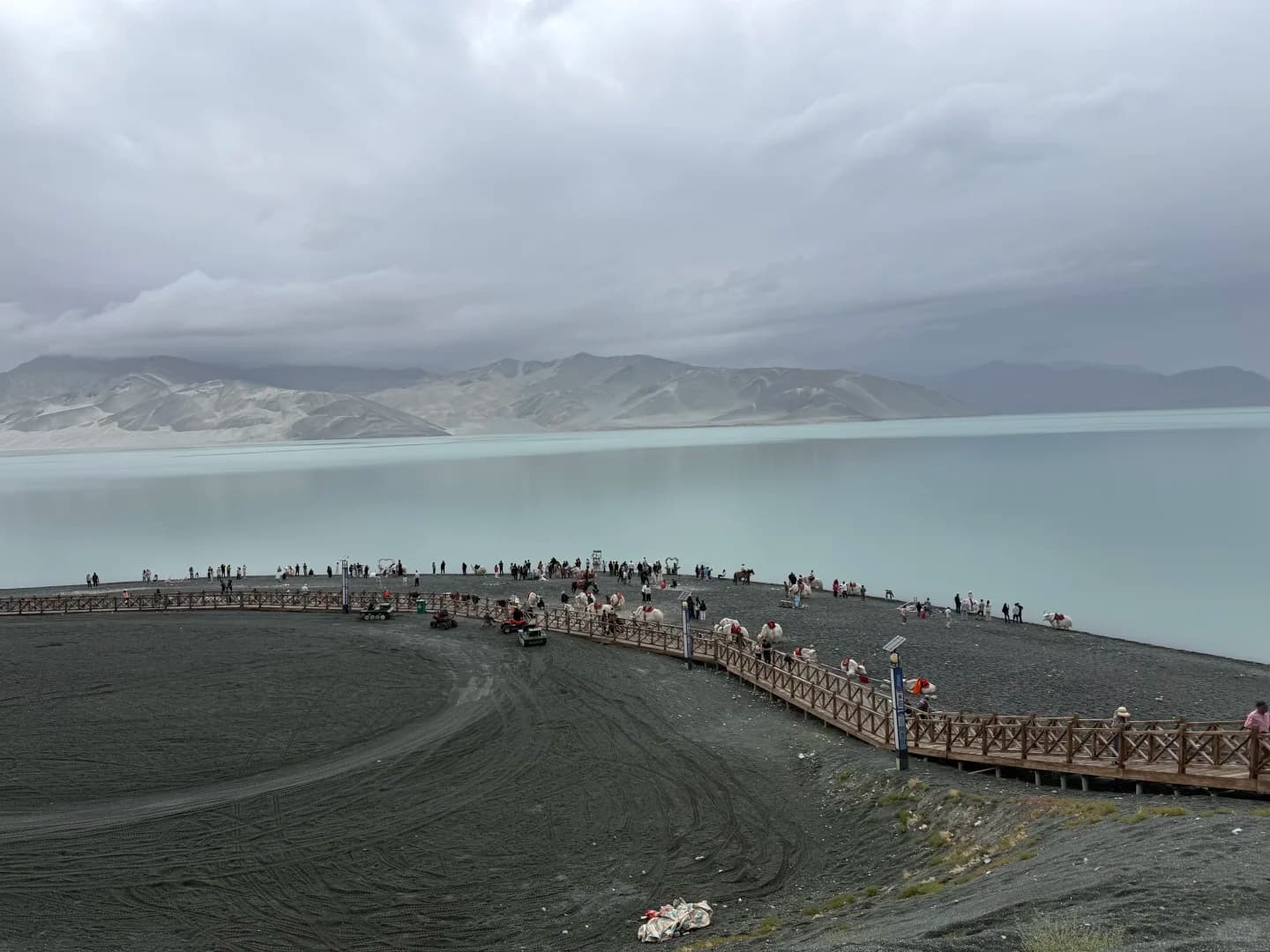
In Akto County, pale sand-covered slopes and blue-green water form a distinctive Pamir landscape outside Kashgar city.
Caption & source
Separate the sand, water and mountain layers
The Baisha Lake–Baisha Mountain scenic landscape is in Bulunkou Township, Akto County, within Kizilsu Kyrgyz Autonomous Prefecture. The official description places pale sand-covered mountains beside Bulunkul Lake, with high mountain scenery extending beyond them. This is a regional Pamir landscape geographically separate from Kashgar’s urban landmarks.
Look at the meeting of the sand-covered slope and the water, then the darker mountain forms behind them. Their different textures create depth even when the colours seem simple. Reading those layers makes it easier to understand the place than treating the lake alone as the whole scene.
Sources & photograph credits
Background and reading notes adapted from the sources below. Photographs are credited to their original authors.
- 白沙湖—白沙山景区
Kizilsu Kyrgyz Autonomous Prefecture Culture, Sports and Tourism Bureau · Checked
Bulunkou Township in Akto County, Bulunkul Lake, sand-covered slopes and mountain setting. The lake is outside Kashgar city; landscape-viewing suggestions are editorial.
Kashgar · Pamir surroundings · Akto, Kizilsu
Karakul Lake
A highland lake below Muztagh Ata brings the scale of the Pamir mountains into view, well beyond Kashgar’s city streets.
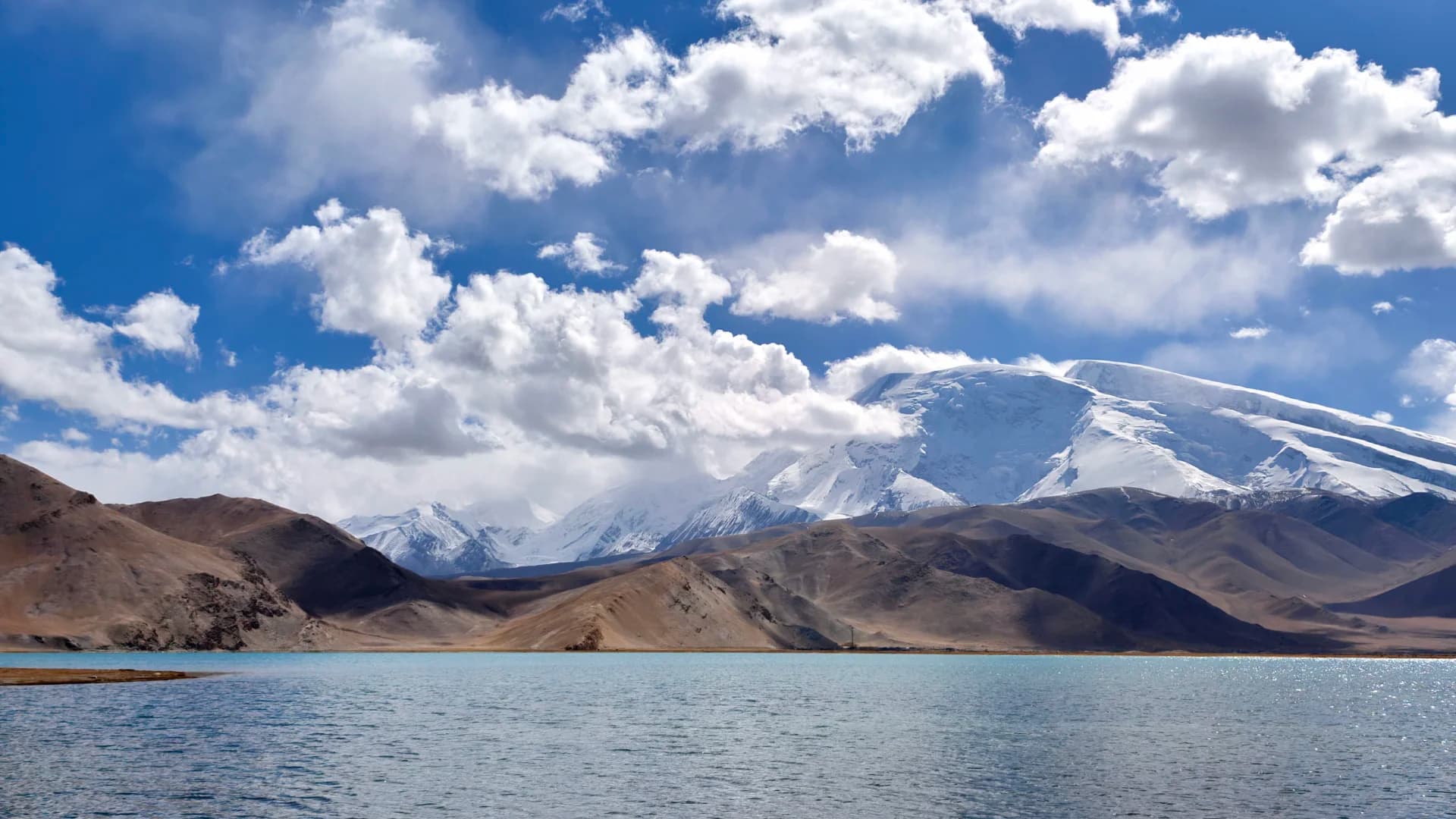
Caption & source
Read the lake as part of the high mountains
Karakul Lake lies in Bulunkou Township, Akto County, in Kizilsu Kyrgyz Autonomous Prefecture. Akto’s official account places the lake beneath the snow-covered mass of Muztagh Ata. Its highland setting belongs to the Pamir surroundings rather than to Kashgar’s urban area.
Begin with the shoreline as a measure of distance, then lift your view toward the mountain’s broad slopes and snowfields. Water, lower ground and high peaks create separate scales within the same view. The lake becomes a way to see the mountain landscape, as well as a subject in its own right.
Sources & photograph credits
Background and reading notes adapted from the sources below. Photographs are credited to their original authors.
- 阿克陶县旅游资源:慕士塔格峰—喀拉库勒湖
Akto County People’s Government · Checked
Karakul Lake’s location in Bulunkou Township, Akto County, beneath Muztagh Ata, within the regional highland landscape. Viewing suggestions are editorial.
Kashgar · Glazed tiles & historic architecture
Xiangfei Garden & Apak Hoja mausoleum
Green-glazed domes, patterned walls and shaded paths invite a closer look at Kashgar’s architectural decoration.
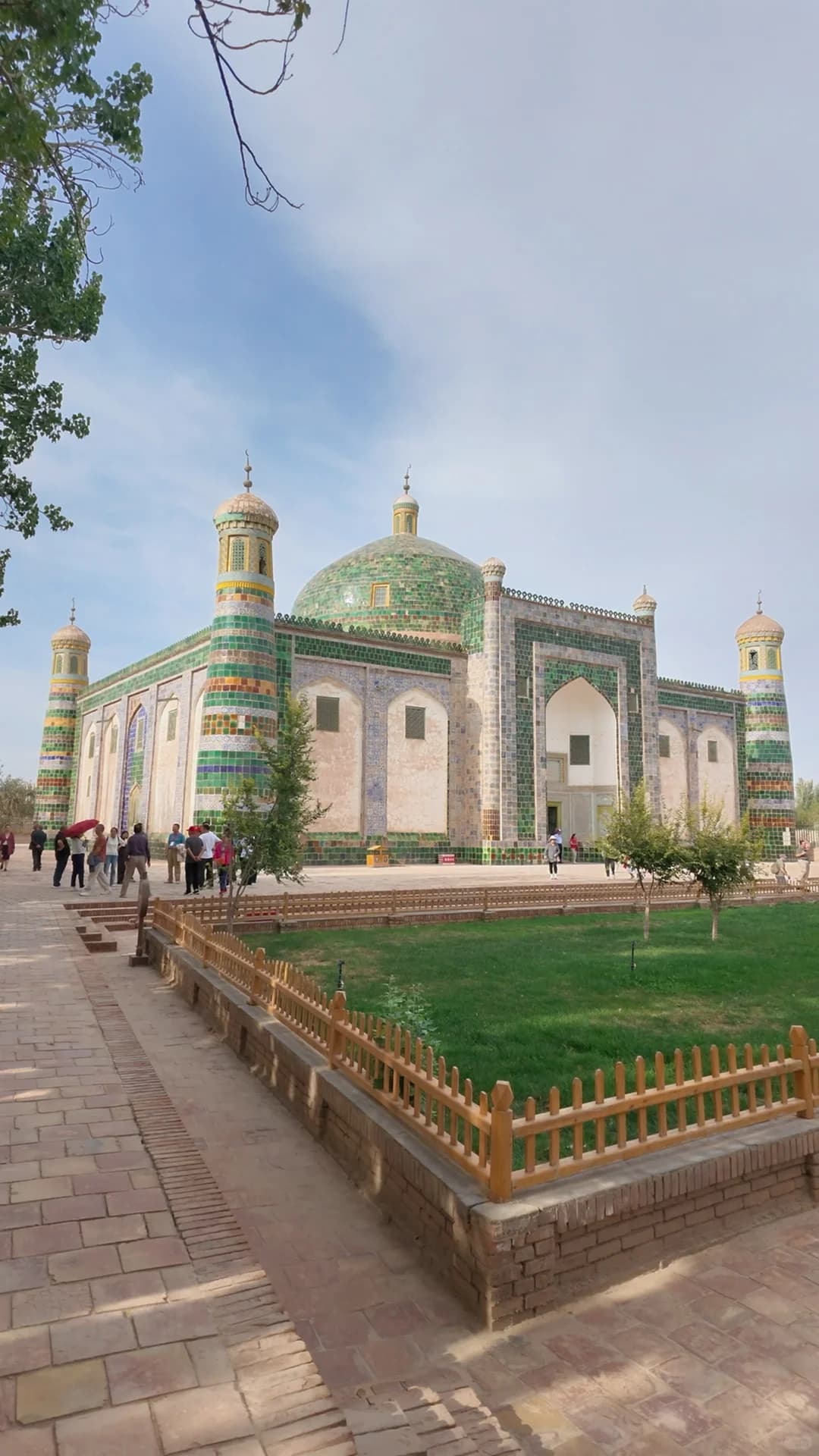
Caption & source
Begin with the historic complex.
Xiangfei Garden includes the Apak Hoja family mausoleum complex, together with newer cultural visitor areas. The historic buildings give the wider attraction its architectural focus.
The collected architectural note describes glazed tiles in green, blue and yellow. Looking across the wall surface reveals changes in pattern as well as colour.
Move from outline to detail.
From a distance, the dome and corner towers organise the view. Closer to the building, arched recesses and repeated tile motifs become easier to distinguish.
The travel notebook encourages lingering over individual pieces of glazed decoration. It is a useful approach here: the smaller details add as much interest as the overall silhouette.
Sources & photograph credits
Background and reading notes adapted from the sources below. Photographs are credited to their original authors.
- Kashgar cultural sights · Xiangfei Garden
Kashgar Prefectural Administration · Checked
Xiangfei Garden includes the historic Apak Hoja mausoleum complex alongside newer cultural visitor areas.
- 国庆去喀什,除了古城的五个宝藏地(人少)
Xiaohongshu · WeiWill · Checked
Archived travel-note body and original photographs informed the descriptions of visible details. These observations are adapted, not a Matchstick field report.
- 喀什漫游指南:24 件值得做的小事(亲测版)
Xiaohongshu · 爱乌及乌 · Checked
Archived travel-note body and original photographs informed the descriptions of visible details. These observations are adapted, not a Matchstick field report.
Kashgar · Courtyard lanes & craft details
Gaotai old houses
Earthen-coloured walls, shaped brickwork and small shops offer another perspective on Kashgar’s old-city architecture.
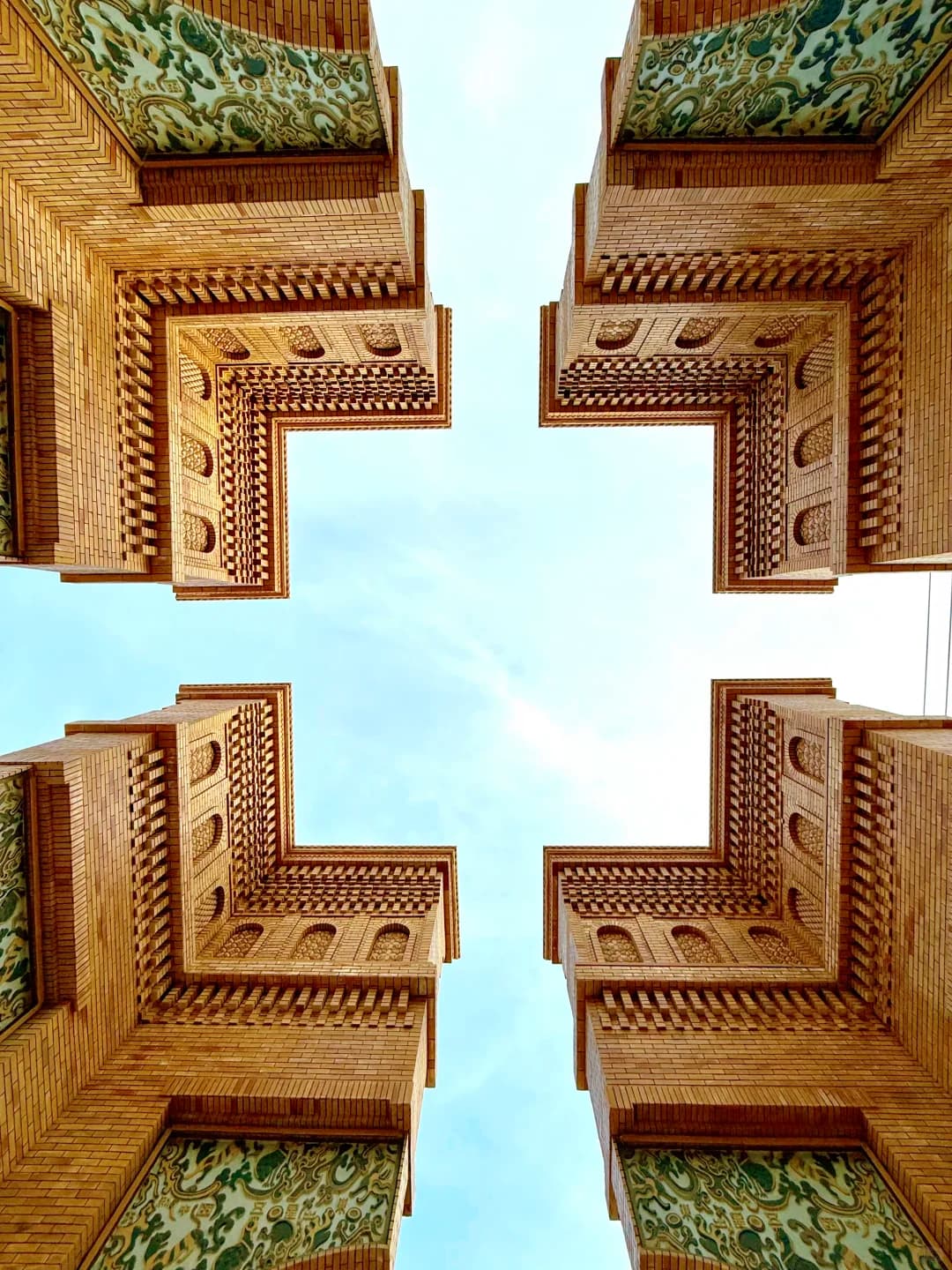
Caption & source
A neighbourhood shaped by its ground.
Gaotai is a preserved and restored old-house area on raised ground near the Tuman River. Winding lanes and closely grouped buildings reflect a different scale from the modern city.
Its present-day visitor spaces include traditional craft workshops and small shops. Pottery is part of the neighbourhood’s cultural story.
Look up as well as along the lanes.
The collected city-walk photographs identify Gaotai’s patterned brickwork and views framed by adjoining facades. Looking upward reveals details that a street-level glance can miss.
Another archived notebook draws attention to small shops and handmade objects here. Notice the materials, doors and shop displays as individual details within the restored setting.
Sources & photograph credits
Background and reading notes adapted from the sources below. Photographs are credited to their original authors.
- Gaotai old houses after restoration
Kashgar Economic Development Zone · China Kashgar · Checked
The preserved earthen-house neighbourhood, winding lanes and craft workshops; it includes restored visitor spaces.
- 喀什Citywalk❗️码住这❶❽个机位(古城东)
Xiaohongshu · 冷不少 · Checked
Archived travel-note body and original photographs informed the descriptions of visible details. These observations are adapted, not a Matchstick field report.
- 喀什漫游指南:24 件值得做的小事(亲测版)
Xiaohongshu · 爱乌及乌 · Checked
Archived travel-note body and original photographs informed the descriptions of visible details. These observations are adapted, not a Matchstick field report.