
Shenzhen · City culture
A city understood through work and public life
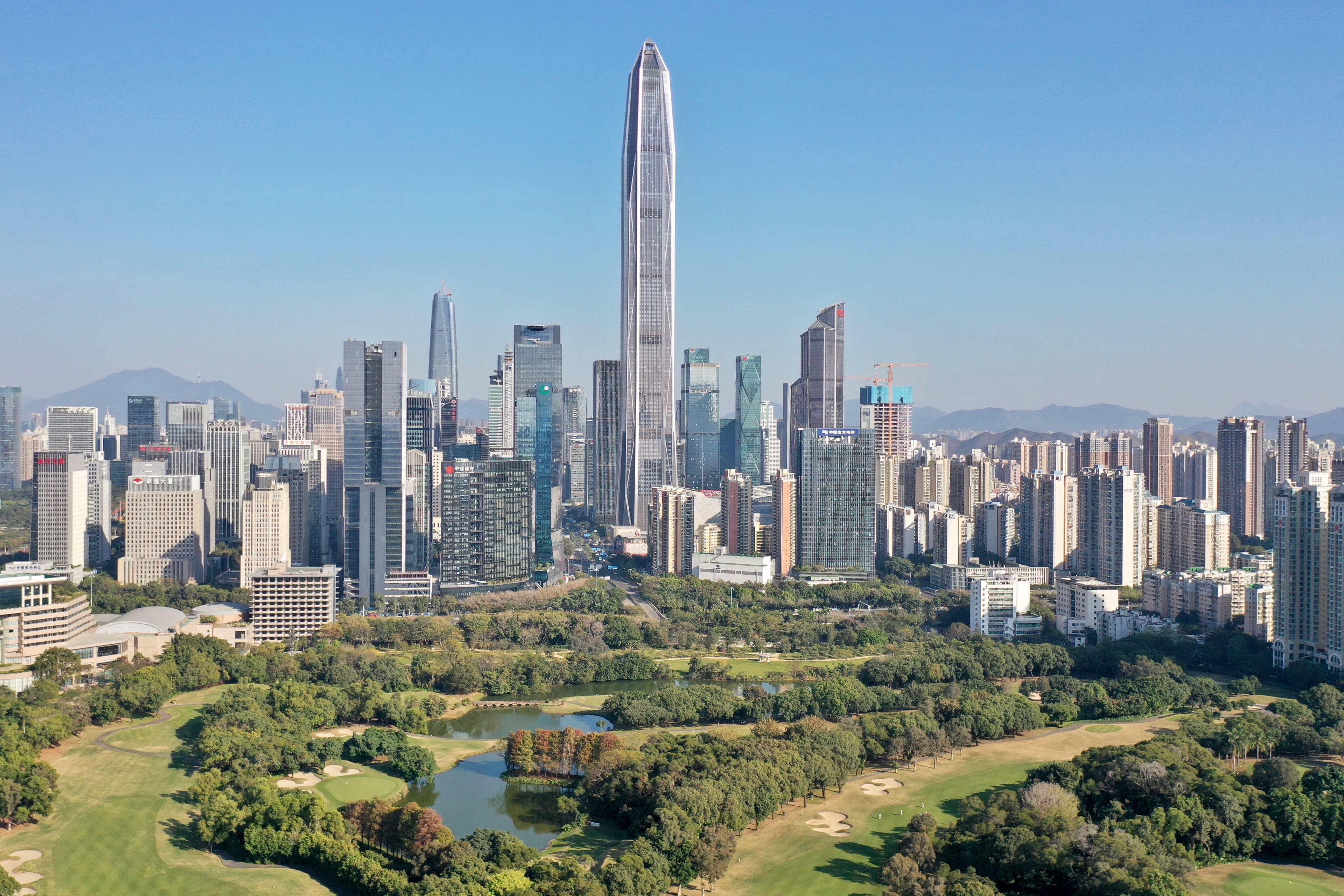
Shenzhen’s urban character is visible in the relationship between planned civic spaces and places where people make and trade things. The Futian skyline and Civic Centre express the scale of the modern city; Huaqiangbei reveals a denser world of components, products and exchange.
Dafen’s painting streets and Dongmen’s commercial life offer other perspectives. Art production, neighbourhood shops and older market traditions sit alongside the city’s better-known technology identity. Parks provide space from which to see these different urban scales together.
Civic landmarks, electronics and creative streets
Lianhuashan and the Civic Centre introduce the shape of central Shenzhen. Huaqiangbei shows the electronics trade at street level, while Dafen connects art with making and commerce. Dongmen reveals an older market district within the modern city.
Inside this city guide.
Read the city through its public spaces and working neighbourhoods. Each place has a short introduction and details to notice. Further chapters explore more neighbourhoods, cultural places and landscapes through collected travel notebooks.
Shenzhen · Urban park & city perspective
Lianhuashan Park
A wooded hill and broad park landscape offer a different scale from the city’s towers.
Caption & source
Connect the hilltop and the city below
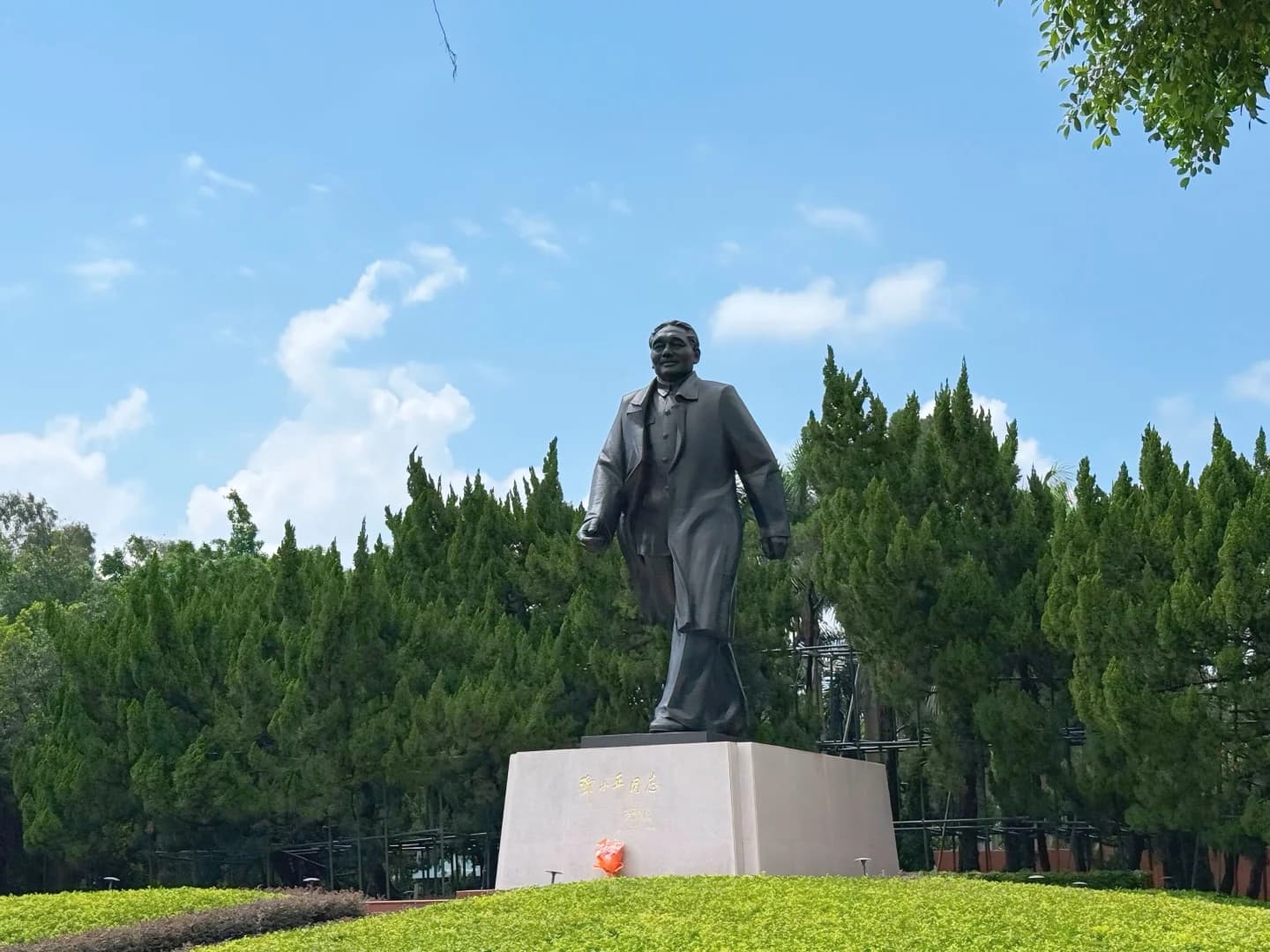
Lianhuashan, also called Lianhua Hill Park, is an urban park in Futian. Its hilltop plaza contains a bronze statue of Deng Xiaoping, while the wider park combines lawns, trees, paths and water within the central city.
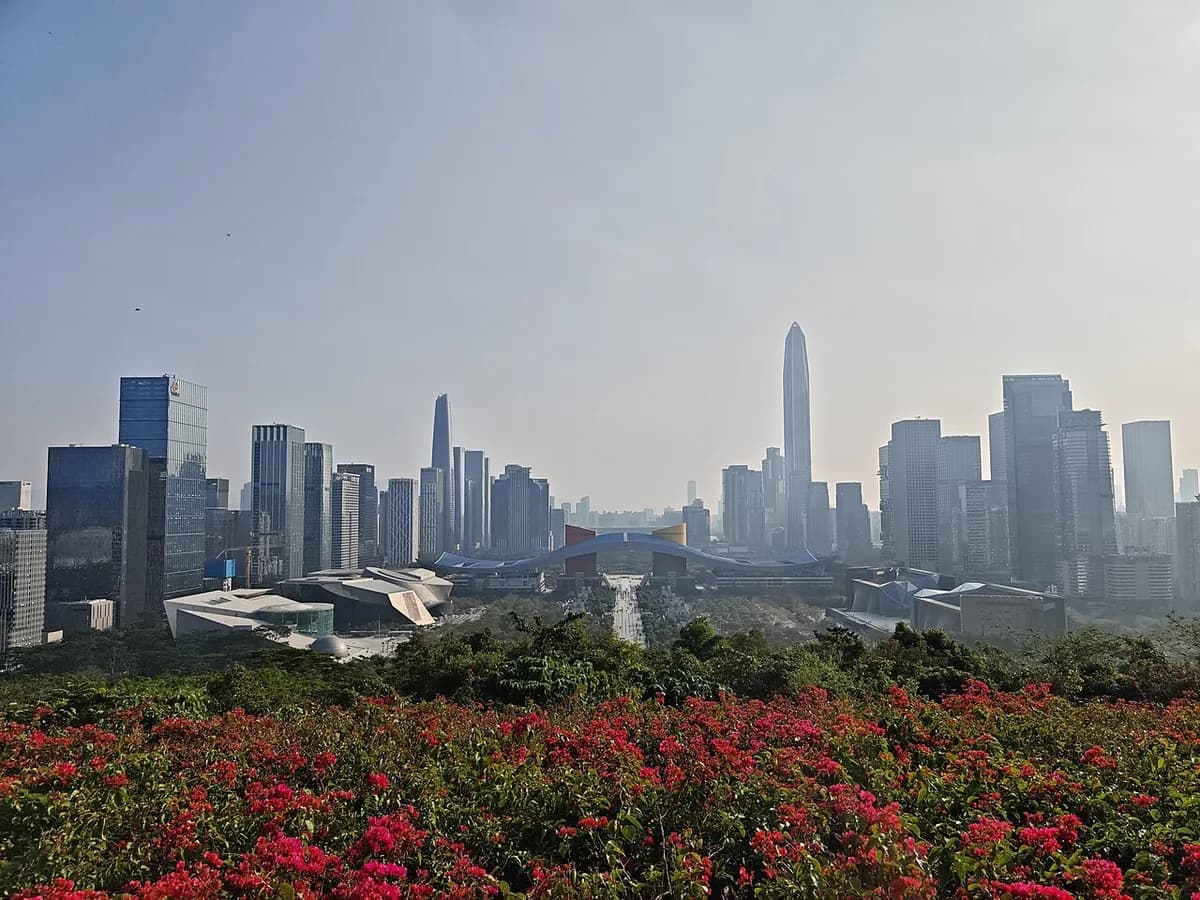
The view toward the Civic Centre and Futian skyline makes the planned urban axis easier to understand. Notice how open green space sits beside dense building groups. The park combines this city-scale perspective with the smaller movements of everyday recreation.
Sources & photograph credits
Background and reading notes adapted from the sources below. Photographs are credited to their original authors.
- Lianhua Hill Park
Shenzhen Municipal Government · Checked
Futian park setting, hilltop plaza and Deng Xiaoping statue, lawns and water features.
- Explore Shenzhen’s coastal and urban wonders
Shenzhen Municipal Government / Shenzhen Municipal Culture, Radio, Television, Tourism and Sports Bureau · Checked
Views of the central axis, Civic Centre and Futian skyline from Lianhua Hill Park. Observation suggestions are editorial.
Shenzhen · Civic architecture · exterior
Shenzhen Civic Centre
A broad, wing-like roof gives Shenzhen’s civic centre a distinctive horizontal presence among the towers.
Caption & source
Notice the roof and the surrounding scale
The Civic Centre is a landmark of Futian’s central district. Its vast roof is shaped like an eagle spreading its wings, bringing a group of civic functions beneath one recognisable architectural form.
Look at the long roofline and its contrast with the taller buildings around it. The open setting helps make the city’s planned civic scale visible. Reading the building from outside allows its silhouette, colours and relationship to public space to remain the focus.
Sources & photograph credits
Background and reading notes adapted from the sources below. Photographs are credited to their original authors.
- CSCEC’s four decades in Shenzhen Special Economic Zone
China State Construction Engineering Corporation, project builder · Checked
The builder’s account of Shenzhen Civic Centre and its eagle-wing roof. The chapter describes exterior architecture without adding entry to government offices, a museum or a light show.
Shenzhen · Electronics markets & making
Huaqiangbei
An electronics district makes the city’s connections between components, products and trade visible.
Caption & source
Look at the layers behind a finished product
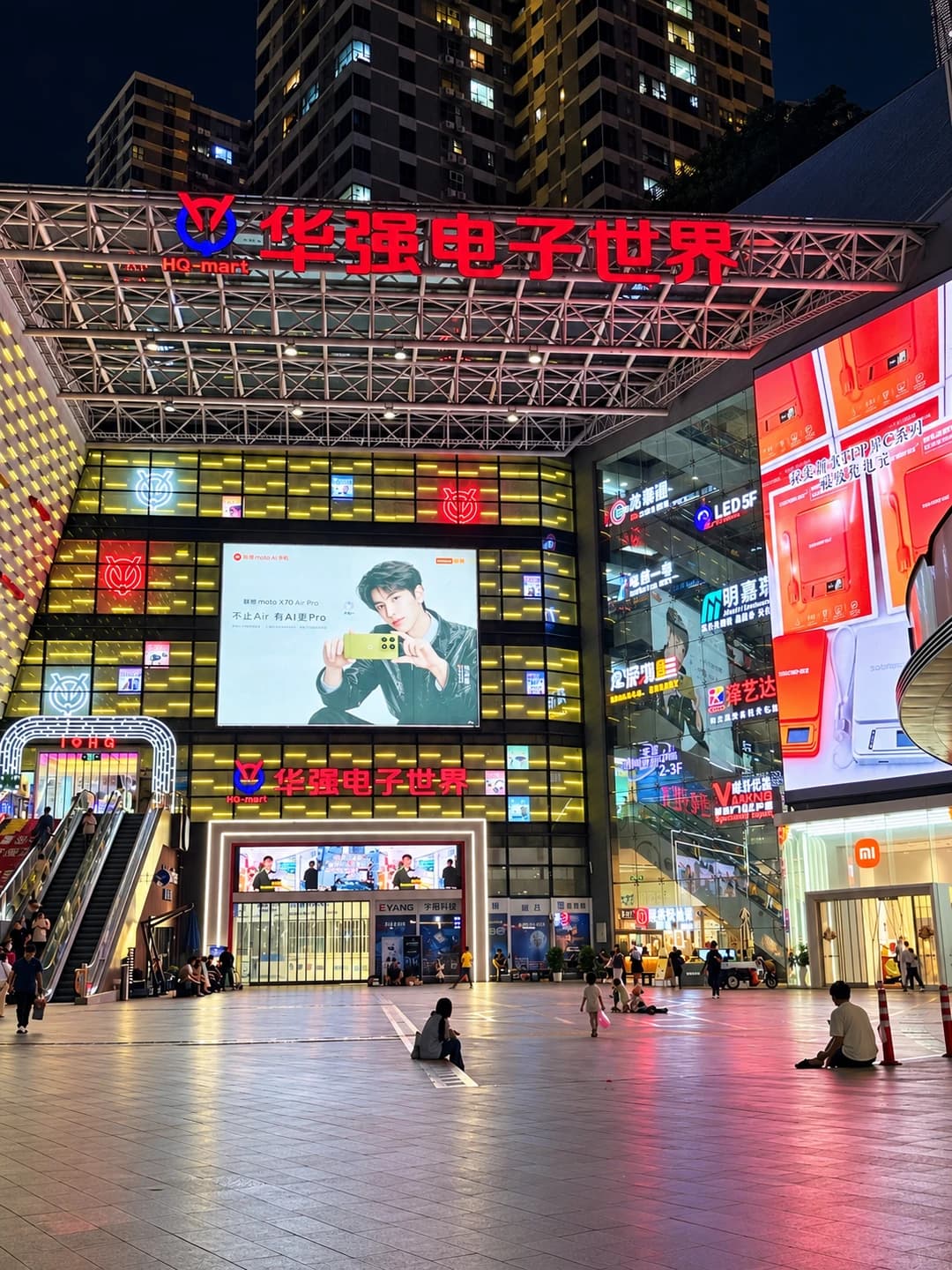
Huaqiangbei developed from an electronics industrial area into a major centre for the production, wholesale and retail of electronic goods. The opening of the SEG supporting market in 1988 was an important step in that transformation.
Notice the difference between small components and complete consumer products, and how many specialised businesses sit close together. This concentration helps explain the district’s role in hardware making and exchange. The interest lies in the working commercial landscape as much as in individual gadgets.
Sources & photograph credits
Background and reading notes adapted from the sources below. Photographs are credited to their original authors.
- China’s No. 1 electronics street: Huaqiangbei
Shenzhen Municipal Government / Shenzhen Archives · Checked
Development from the Shangbu electronics industrial area, the SEG market in 1988 and the production/wholesale/retail cluster. No product demonstration, workshop or purchase is promised.
Shenzhen · Painting studios & art commerce
Dafen Oil Painting Village
An artists’ district brings painting, production and the sale of art into the same streets.
Caption & source
Notice the work behind the image
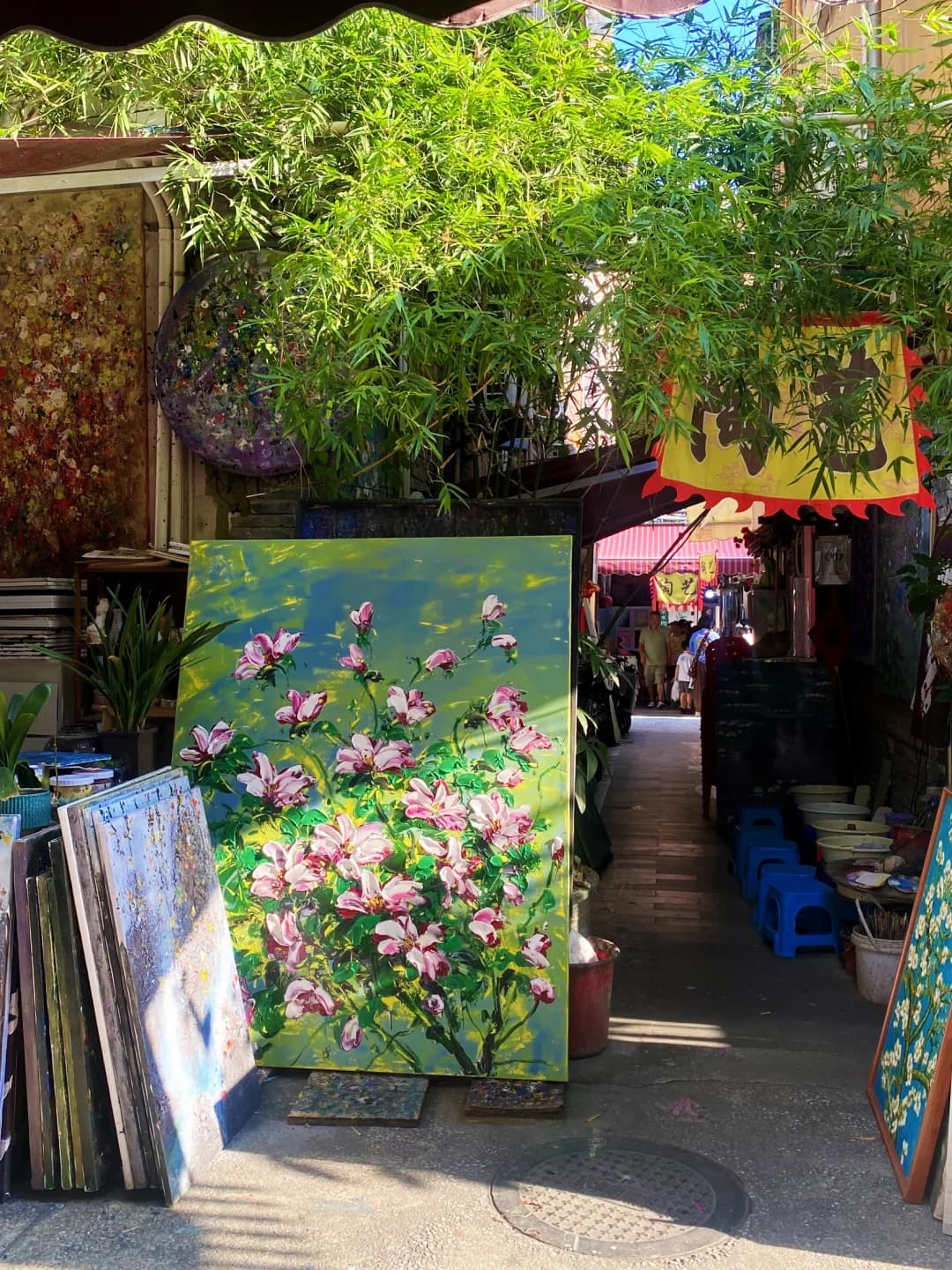
Dafen’s oil-painting industry developed after painter and art dealer Huang Jiang arrived in 1989. The area became a cluster for producing, copying and trading paintings, while original work and related activities such as framing, calligraphy and art supplies developed alongside it.
Notice the variety of canvases, subjects and workshop or gallery fronts. Looking at a painted surface as something made through repeated practical work adds another dimension to the street. Dafen connects artistic choices with the materials and commercial systems that carry images to buyers.
Sources & photograph credits
Background and reading notes adapted from the sources below. Photographs are credited to their original authors.
- Dafen Oil Painting Village
Longgang District Government, Shenzhen · Checked
Huang Jiang’s arrival in 1989, the painting-production and trade cluster, original works, reproductions and supporting arts. No painting class, studio access or live demonstration is promised.
Shenzhen · Older market district & street food
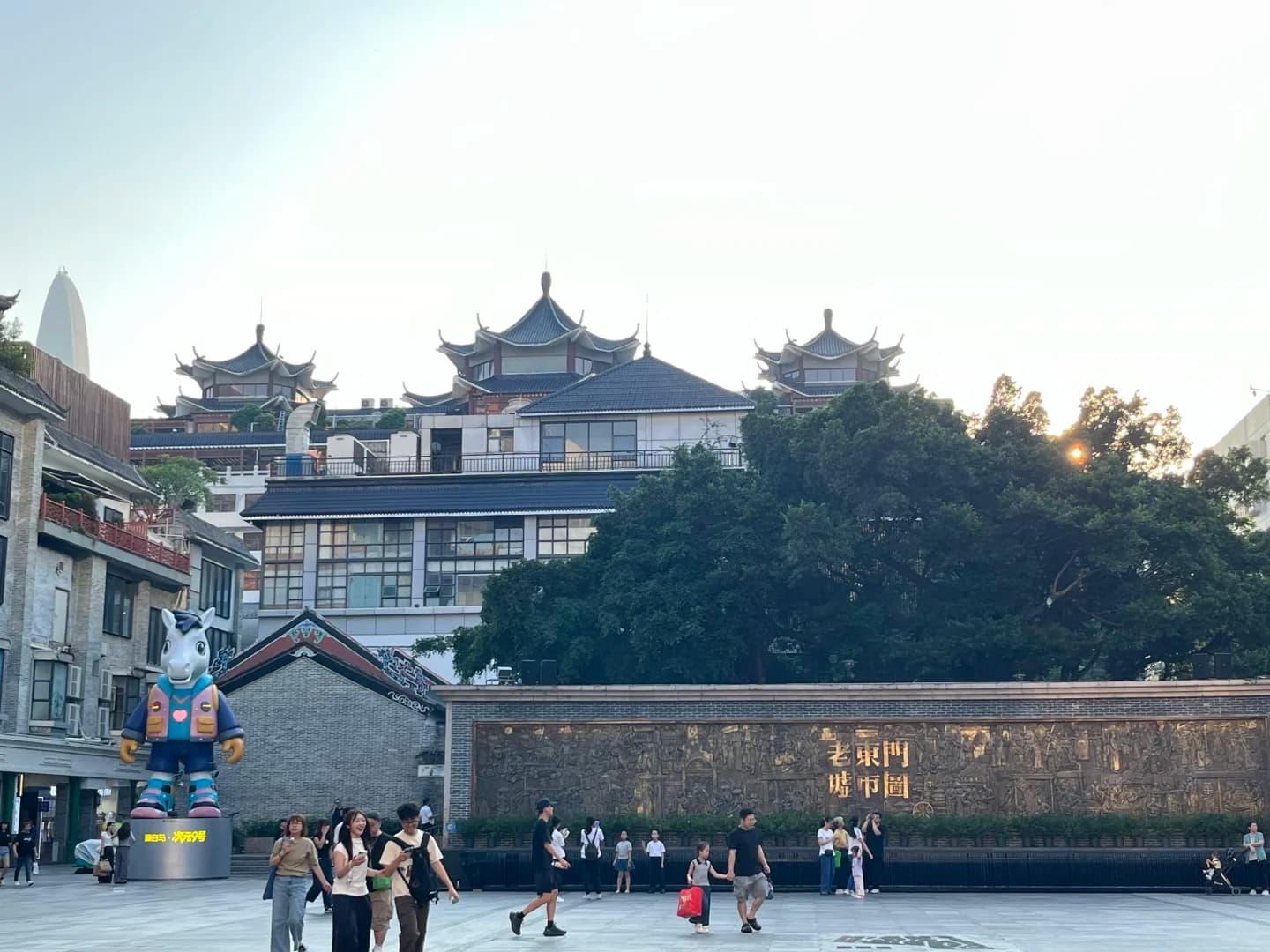
Dongmen
A long-established commercial district adds an older market story to the modern city.
Caption & source
Look at commerce at the scale of the street
Dongmen developed from an older market known as Shenzhenxu. In Luohu, its commercial identity connects small stalls and larger department stores with food shops and pedestrian streets, showing a different side of the city from its newer civic centre.
Notice the close spacing of signs, shopfronts and food counters, and how people use the spaces between them. The mixture of shopping and eating gives the district its public rhythm. Its older market background helps explain why commerce remains central to Dongmen’s identity.
Sources & photograph credits
Background and reading notes adapted from the sources below. Photographs are credited to their original authors.
- Paintings featuring Dongmen on display
Shenzhen Municipal Government · Checked
Dongmen’s Shenzhenxu market origins, Luohu location, pedestrian-shopping development and mix of shops, department stores and street food. The historical exhibition mentioned by the source is not described as a current attraction.
Shenzhen · Lakeside lawns & the Houhai skyline
Shenzhen Talent Park
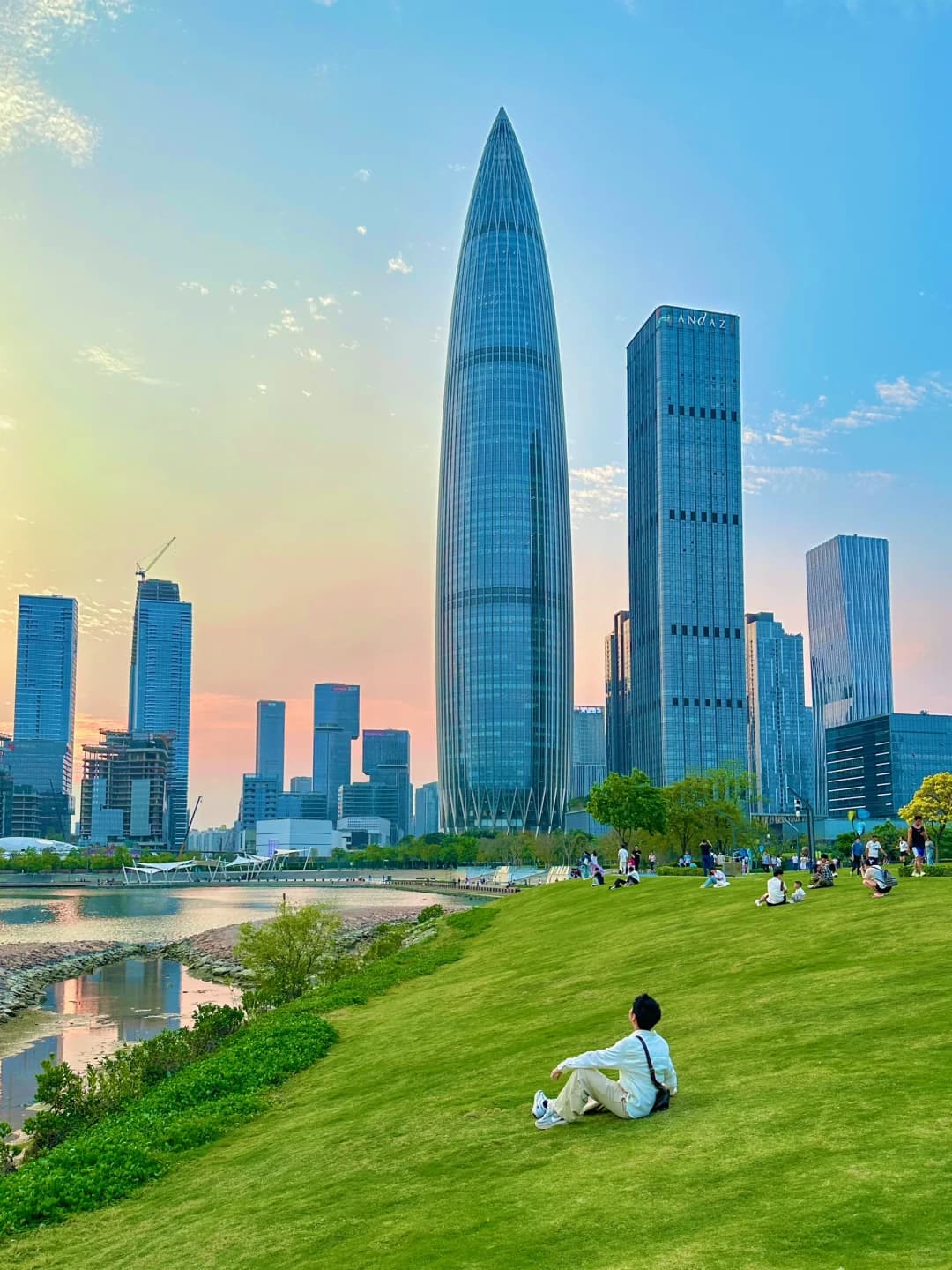
Talent Park places a lake, open lawns and Shenzhen’s Houhai skyline in the same view, making the city’s public landscape as memorable as its towers.
Caption & source
A park about people and ideas
Opened in 2017 in Houhai, Nanshan, the park was designed around the theme of talent. Its lake and lawns are joined by themed landscapes such as the Academicians’ Forest and the Hill of Prominent Figures.
It connects with the Shenzhen Bay coastal recreation belt. Water, paths and planted areas bring a human scale to the surrounding business district, giving the skyline a foreground beyond roads and office entrances.
The city seen from the grass
The sloping lawn beside the water creates an inviting view toward the pointed “Spring Bamboo” tower. People sitting, talking and watching the skyline are part of the scene, rather than an interruption to it.
The pleasure is in the contrast between that unhurried foreground and the vertical city beyond. Changing light alters the view, so there is value in spending a little time with one stretch of lakeside instead of chasing every angle.
Sources & photograph credits
Background and reading notes adapted from the sources below. Photographs are credited to their original authors.
- 深圳人才公园
Shenzhen Urban Management and Law Enforcement Bureau · Checked
2017 opening, Houhai location, lake/lawns, talent-themed landscapes and connection with Shenzhen Bay coastal leisure belt.
- 为了这18张图📸我来了趟深圳!!附地址
Yerks / Xiaohongshu · Checked
The author names the Talent Park lawn and Spring Bamboo tower; images 1 and 2 clearly identify this skyline setting. Commercial banking promotion is excluded.
Shenzhen · Waterfront paths & open horizons
Shenzhen Bay Park
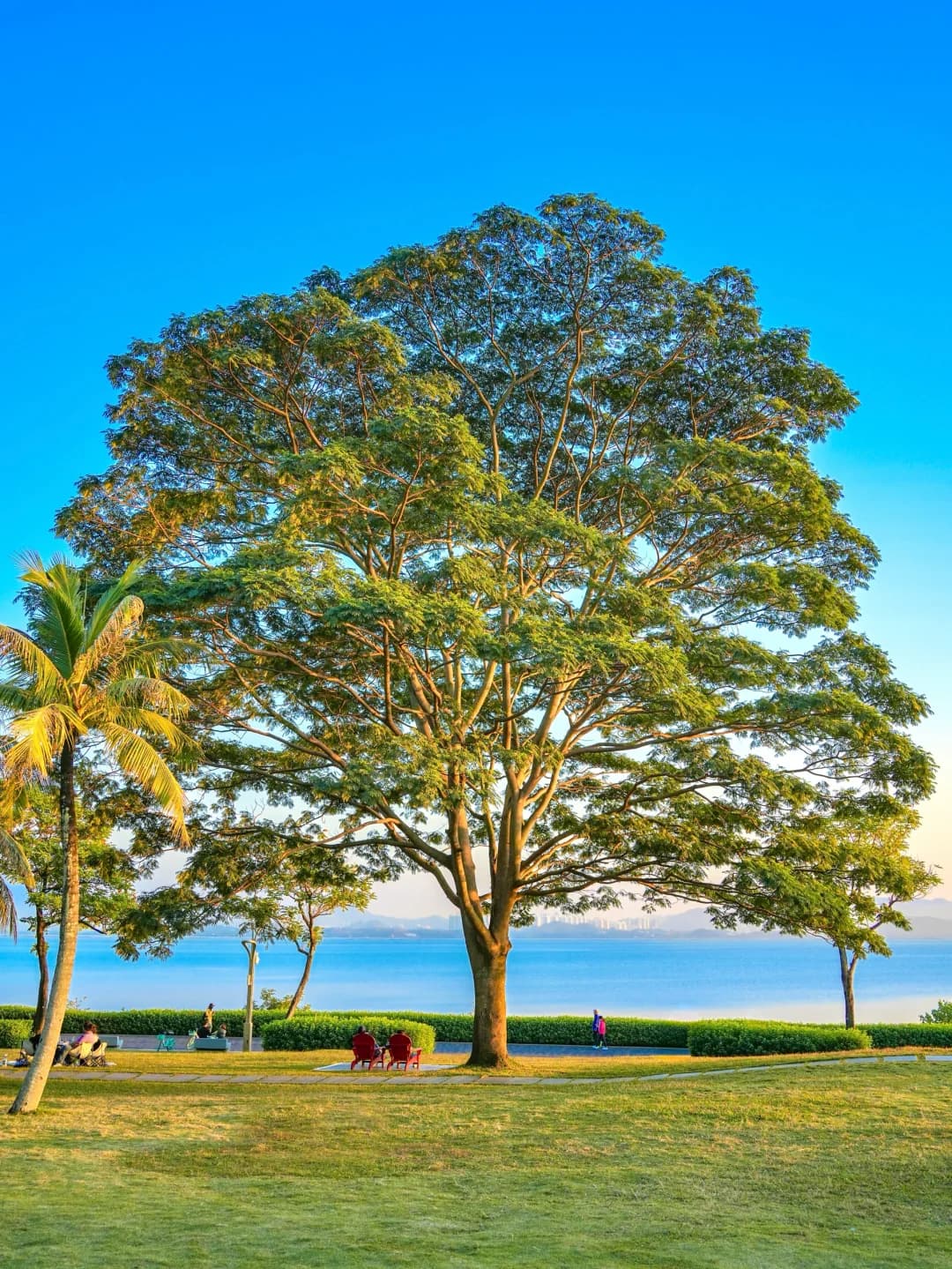
Shenzhen Bay Park offers a long, open edge to the city, with coastal paths, lawns and views that change with the weather and tide.
Caption & source
A continuous coastal landscape
The park stretches for about 13 kilometres along Shenzhen Bay across Nanshan and Futian. It combines the Mangrove Coastal Ecological Park with the coastal leisure belt, linking a series of themed landscapes.
Egret Slope, Crescent Valley and the Sunrise Theater are among those places. Their different lawns, tree cover and open edges make this a varied waterfront landscape rather than a single viewpoint.
A different pace beside the bay
A broad-canopied tree, a patch of grass and water beyond can be enough to make a satisfying stop. The park’s appeal lies in the space to watch people walking and the horizon changing, with the city still close at hand.
The same stretch of coast can look quite different in sun, haze or changing light. Enjoy it as a place to linger by the bay, with sun protection and water for exposed stretches of the path.
Sources & photograph credits
Background and reading notes adapted from the sources below. Photographs are credited to their original authors.
- Shenzhen Bay Park
Shenzhen Municipal Government · Checked
Approximately 13-kilometre coastline, two park components, themed landscapes including Egret Slope, Crescent Valley and Sunrise Theater.
- 朋友跟我说深圳没啥好玩的,直到我来了之后…
东勾勾 / Xiaohongshu · Checked
The note describes the lawn and tree at Shenzhen Bay Park’s Egret Slope as a relaxed coastal setting. A relevant comment exchange notes that weather and light affect appearance; promotional material is excluded.