
Urumqi · City culture
A city read through its market streets.
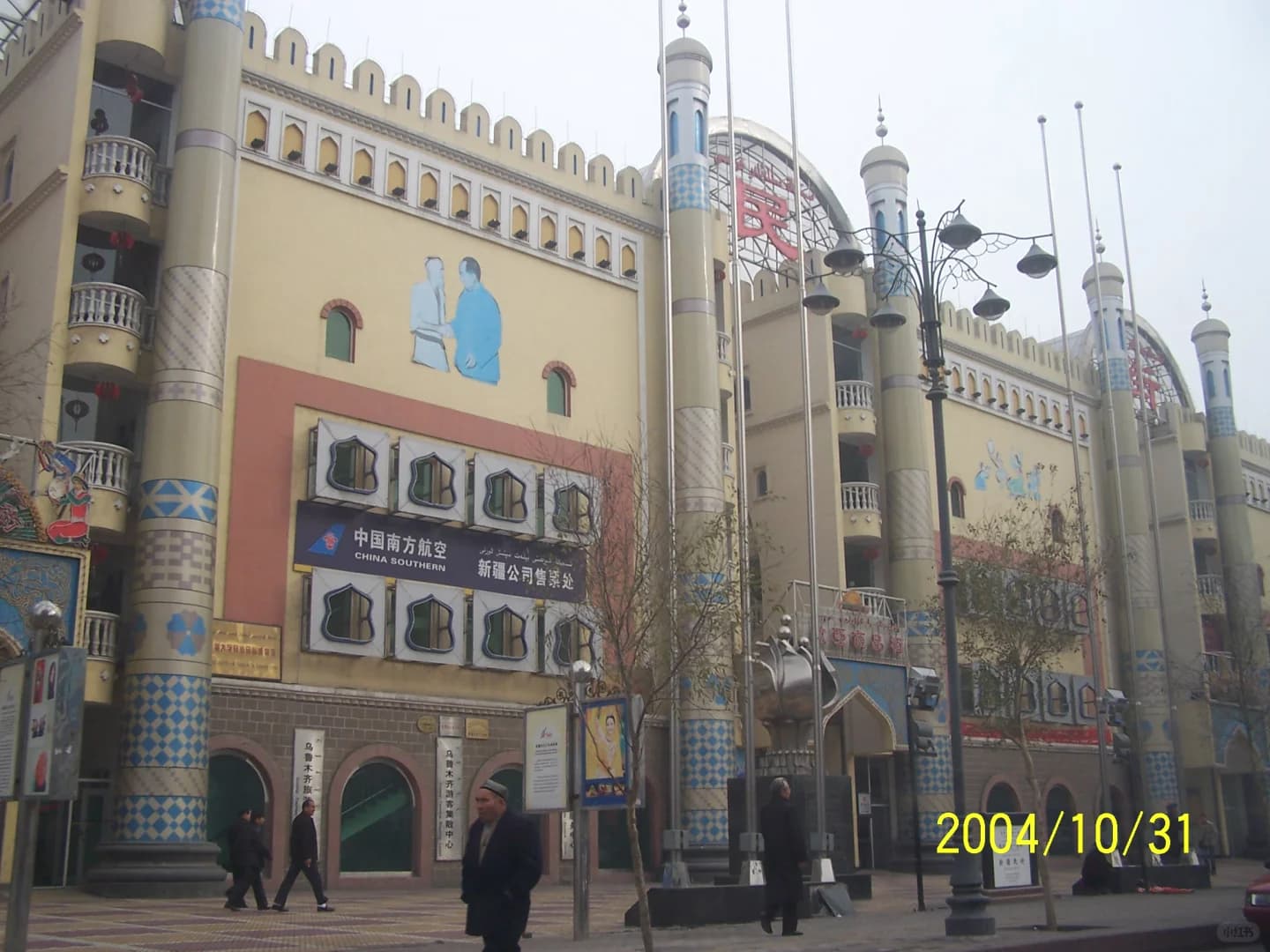
Urumqi’s Erdaoqiao district has a long association with trade. Market buildings and surrounding streets bring together food, textiles and craft objects, making the practical exchange of goods part of the city’s cultural landscape. Small items can be as revealing as a prominent facade.
The district contains several trading places, including Erdaoqiao Market and the neighbouring International Grand Bazaar. Their shopfronts and displays connect everyday shopping with a visitor’s interest in regional design, materials and food. Looking at what an object is used for gives the experience a clearer focus than collecting impressions of a single busy street.
Erdaoqiao’s trading landscape.
Explore the market through its goods, shopfronts and relationship with the surrounding district.
Inside this city guide.
Start with a familiar object, then notice its material, decoration and place in everyday life. Further chapters explore more neighbourhoods, cultural places and landscapes through collected travel notebooks.
Urumqi · Trading streets & regional goods
Erdaoqiao Market
Read Erdaoqiao through the relationship between the objects on sale and the district’s long trading identity.
Caption & source
From a shopfront to a cultural detail
Erdaoqiao Market is part of a wider trading district in Urumqi. The operator traces its market history to the late nineteenth century and its present market development to the early 2000s. Nearby, the separately named International Grand Bazaar contributes further shops, food and craft displays to the same urban area.
Notice how useful objects become displays of material and pattern: a textile, a vessel or an instrument can invite different questions about its making and use. Reading a few objects closely gives the district more depth than treating its markets as one interchangeable landmark.
Sources & photograph credits
Background and reading notes adapted from the sources below. Photographs are credited to their original authors.
- 二道桥大巴扎
Xinjiang Erdaoqiao Culture and Tourism Group · Checked
The market operator’s account of Erdaoqiao’s trading history and early-2000s market redevelopment.
- 新疆国际大巴扎简介
Tianshan District People’s Government, Urumqi · Checked
The surrounding Erdaoqiao trading district and the separately named International Grand Bazaar’s food, textiles, instruments and craft goods. Object-based observation is editorial.
Urumqi · Textiles, documents & material history
Xinjiang Museum
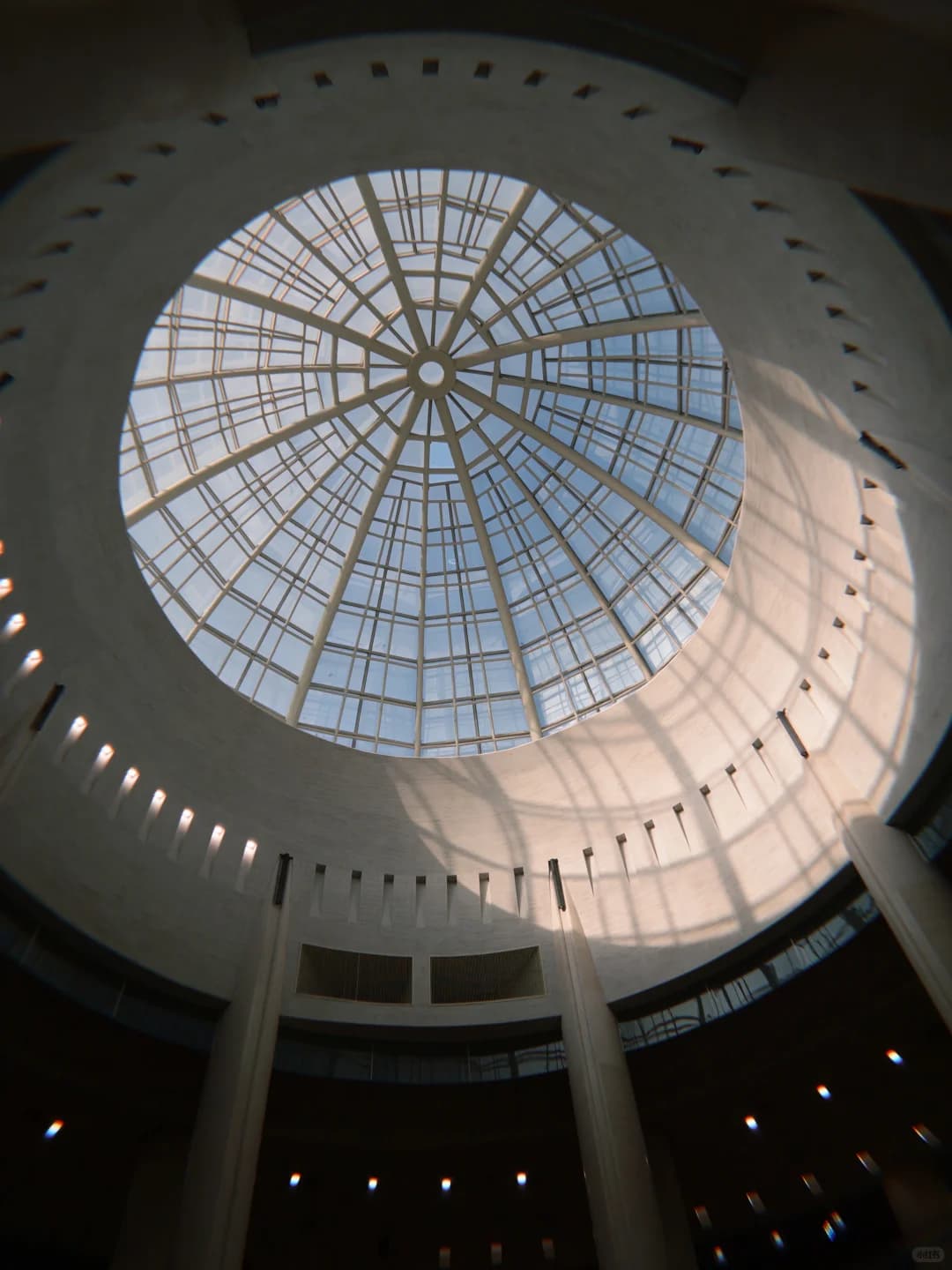
Xinjiang Museum brings together archaeological objects from across the region, with especially rich holdings of textiles, documents and painted sculpture.
Caption & source
Objects from many places
The museum’s historical collections span different periods and parts of Xinjiang. Silk and wool textiles, paper documents and painted clay figures offer evidence of clothing, writing, craft and cultural exchange.
Cloth and paper reward close attention to small features: a woven border, a repeated motif, a line of script or the way a fragment has been joined. These details make material history visible beyond the scale of a map or a dynasty name.
A short inscription woven into silk
Among the museum’s best-known objects is the silk armband bearing the characters “五星出东方利中国”. It was excavated at the Niya site in 1995, far to the south of Urumqi.
The text is woven together with colourful patterning, so the inscription is part of the fabric’s design. Its place of discovery and the expertise required to make it connect a small surviving object with a much wider history of production and exchange.
Sources & photograph credits
Background and reading notes adapted from the sources below. Photographs are credited to their original authors.
- 新疆维吾尔自治区博物馆简介
Sayibak District People’s Government · District Culture and Tourism Bureau · Checked
Official introduction supports the regional historical scope and characteristic textile, paper-document and painted-clay holdings. No current exhibition list or access detail is promised.
- 一片织锦耀中华——新疆博物馆“五星锦”特展讲述国宝前世今生
Xinjiang Department of Finance · Xinjiang Daily · Checked
Supports the Niya discovery in 1995, the armband’s woven inscription, coloured patterning and its association with Xinjiang Museum; the dated special exhibition is not described as a current guarantee.
- 乌鲁木齐只有一天!这条路线我很满意哈哈哈
Xiaohongshu · transfer · Checked
Original archived post and unchanged photograph; supports the attributed visual observations only, not general visitor satisfaction, opening arrangements or historical dating.
Urumqi · Red rock above the city
Hongshan Park
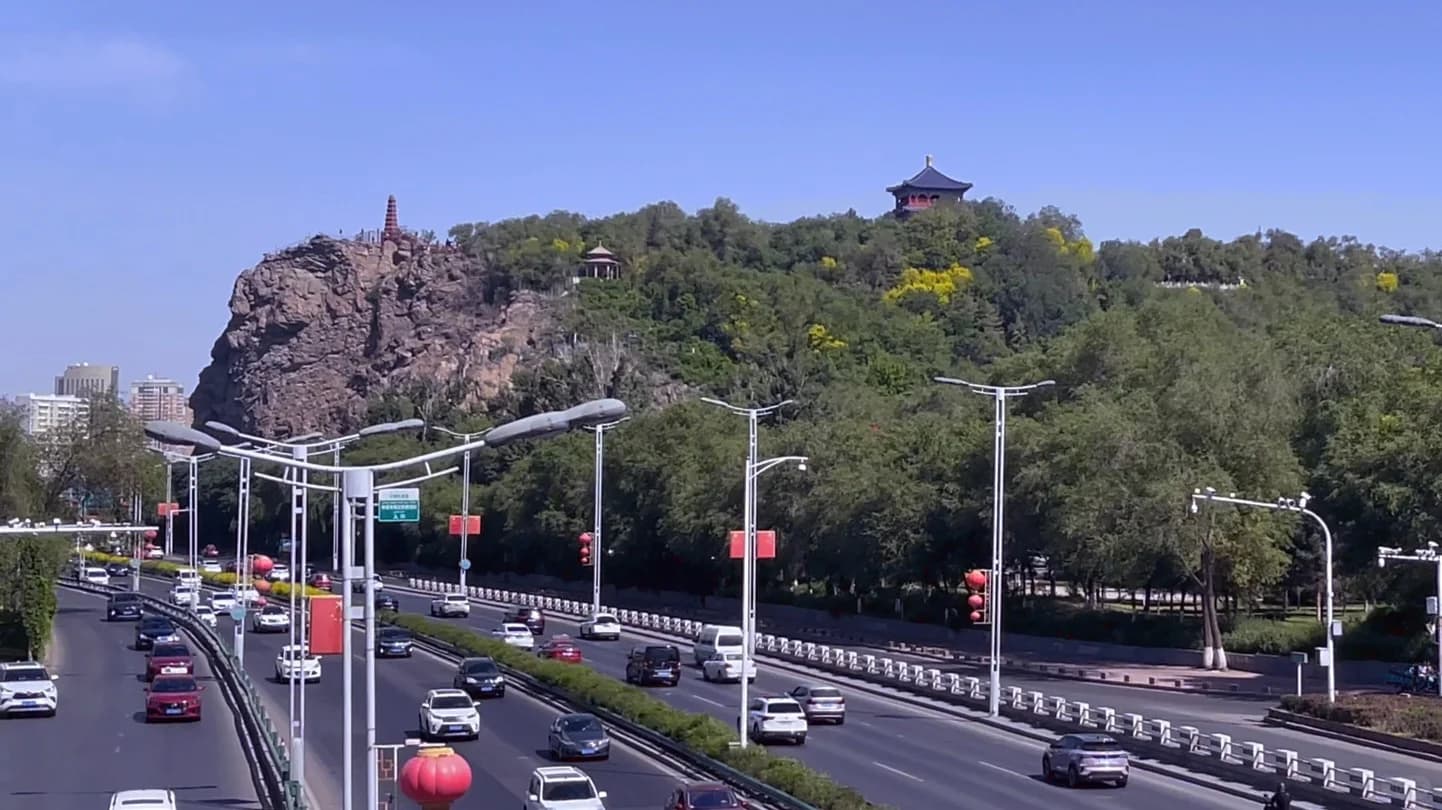
Hongshan’s red-brown rock, wooded slopes and hilltop landmarks form a distinct profile within central Urumqi.
Caption & source
The hill gives the park its name
The reddish colour comes from the mountain’s conglomerate rock. Its exposed face contrasts with the trees planted across the slopes, making the underlying hill easy to recognize from the surrounding streets.
The archived photograph shows that relationship directly: traffic passes beneath the rock face, while the pagoda and a roofed lookout rise above the tree line. The park sits within the city’s everyday movement rather than outside its urban landscape.
A skyline at two scales
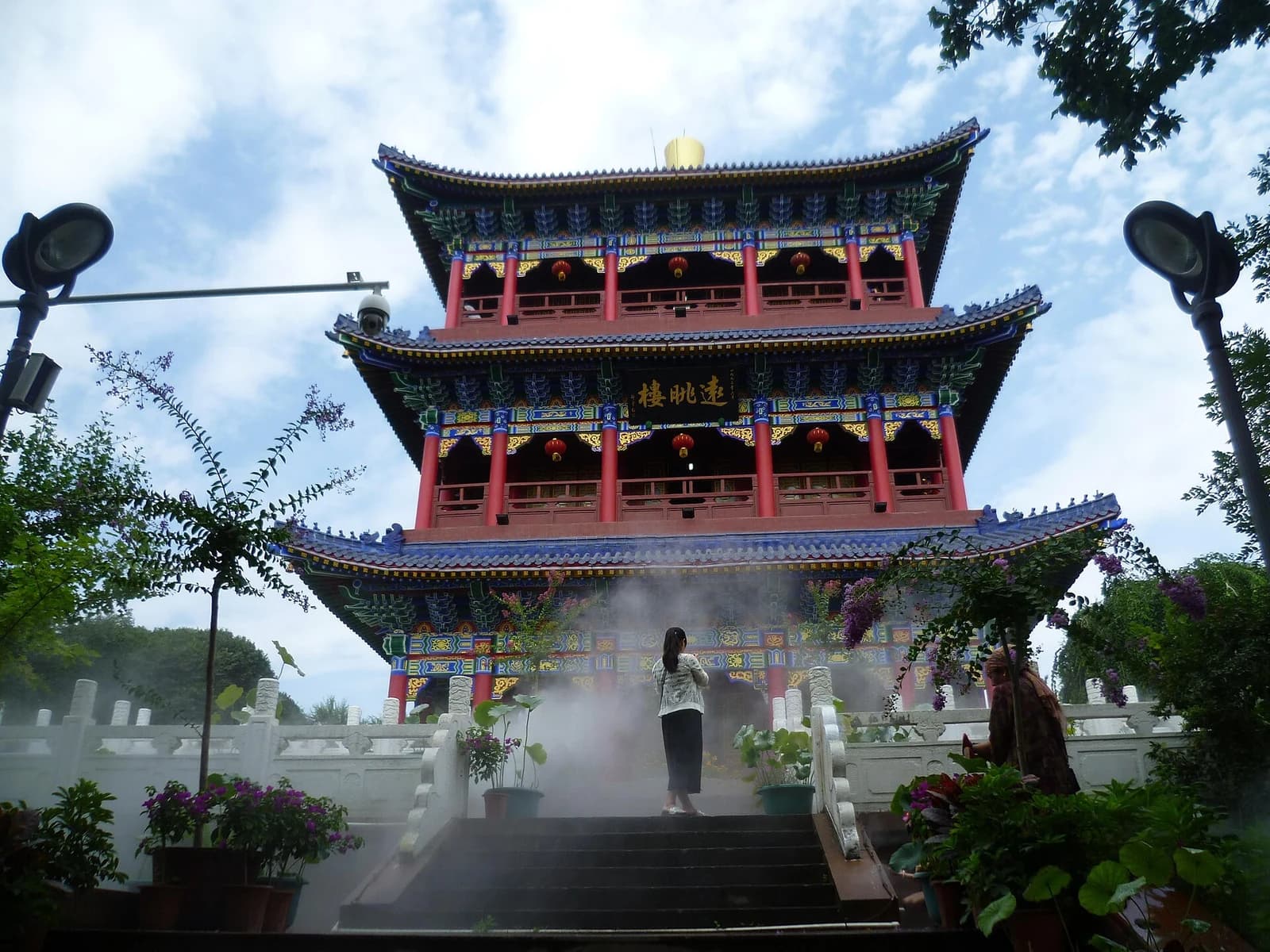
Hongshan Tower is one of Urumqi’s familiar landmarks. The park’s pavilions and Yuantiaolou lookout add other points from which the hill and surrounding city can be read together.
From a distance, the small brick tower marks the edge of the exposed rock. Higher on the wooded slope, the broader lookout roof creates another silhouette. Their different shapes give a scale to the hill amid roads and modern buildings.
Sources & photograph credits
Background and reading notes adapted from the sources below. Photographs are credited to their original authors.
- 新疆乌鲁木齐:红山公园秋恋
Xinjiang Uygur Autonomous Region People’s Government · Hongshan Park · Checked
Park-authored official article supports the central-city setting, reddish conglomerate rock and landmark tower beside Hetan Road.
- 红山
Xinjiang Uygur Autonomous Region People’s Government · Checked
Supports the hill’s urban identity, planted slopes, pavilions and Yuantiaolou lookout. Disputed elevations and precise historical dates are omitted.
- 乌鲁木齐必打卡!红山公园也太好逛了吧
Xiaohongshu · 喜哥旅游 · Checked
Original archived post and unchanged photograph; supports the attributed visual observations only, not general visitor satisfaction, opening arrangements or historical dating.