
Dunhuang · City culture
Art and movement at the desert’s edge.
Dunhuang’s cultural importance comes from contact as well as location. The Mogao Caves bring architecture, painted sculpture and murals together in Buddhist spaces created over many centuries. Their subjects include sacred narratives, donors, decorative patterns and details of worldly life, making the caves a rich record of artistic exchange.
Outside the oasis, dunes and frontier remains offer a different scale of reading. Wind shapes the sand, while walls and fortified sites mark earlier efforts to organise movement through a difficult landscape. These surroundings help place Dunhuang’s celebrated art within the geography of travel, settlement and communication.
Caves, dunes and the western frontier.
Mogao’s painted interiors, the Singing Sand Dunes and the remains around Yumen Pass tell distinct stories of this oasis and its surroundings.
Inside this city guide.
Choose a place to explore the connection between its material, setting and cultural purpose. Further chapters explore more neighbourhoods, cultural places and landscapes through collected travel notebooks.
Dunhuang · Murals, sculpture & sacred space
Mogao Caves
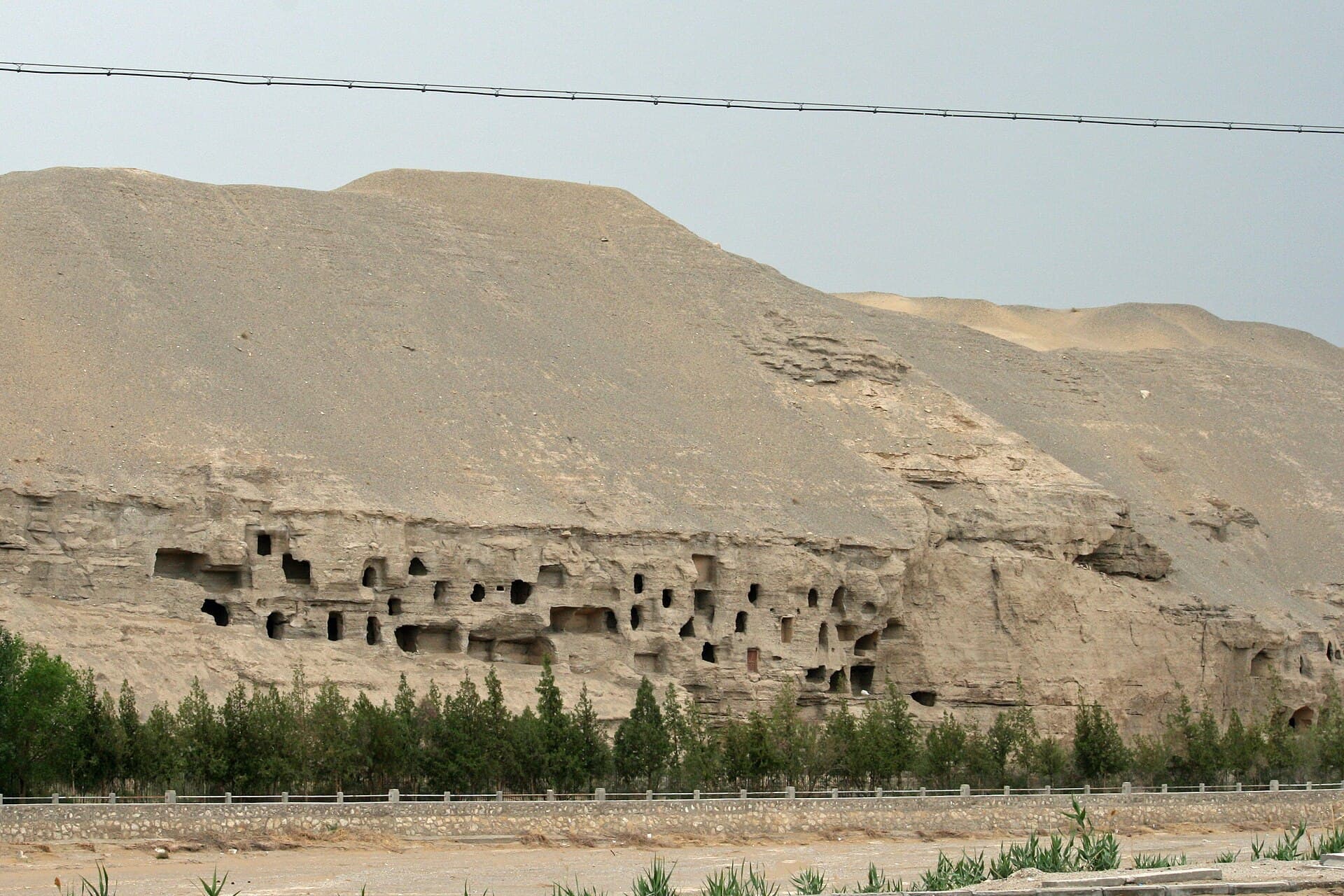
Each decorated cave combines a room, sculpture and painting into a single Buddhist space.
Caption & source
Read the room before the detail
The Mogao Caves were developed over roughly a thousand years, with surviving decorated caves spanning numerous dynasties. The local cliff material favoured modelled, painted clay figures rather than sculpture carved directly into the rock. Walls and ceilings carry imagery that ranges from Buddhist narratives to donor portraits and ornamental patterns.
Begin with the shape of a cave and the position of its principal figure, then notice how the painted surfaces surround them. A ceiling pattern, a narrative scene and a donor portrait serve different purposes. Reading those relationships gives individual details a place within the whole composition.
Sources & photograph credits
Background and reading notes adapted from the sources below. Photographs are credited to their original authors.
- 莫高窟简介
Dunhuang Academy · Checked
Long development, cave forms, cliff material, painted clay sculpture and the relationship of murals, sculpture, donors and decoration. Suggested viewing order is editorial.
- Mogao Caves
UNESCO World Heritage Centre · Checked
Mogao’s long history of Buddhist art and its relationship with Silk Roads cultural exchange.
Dunhuang · Dune forms & oasis contrast
Singing Sand Dunes
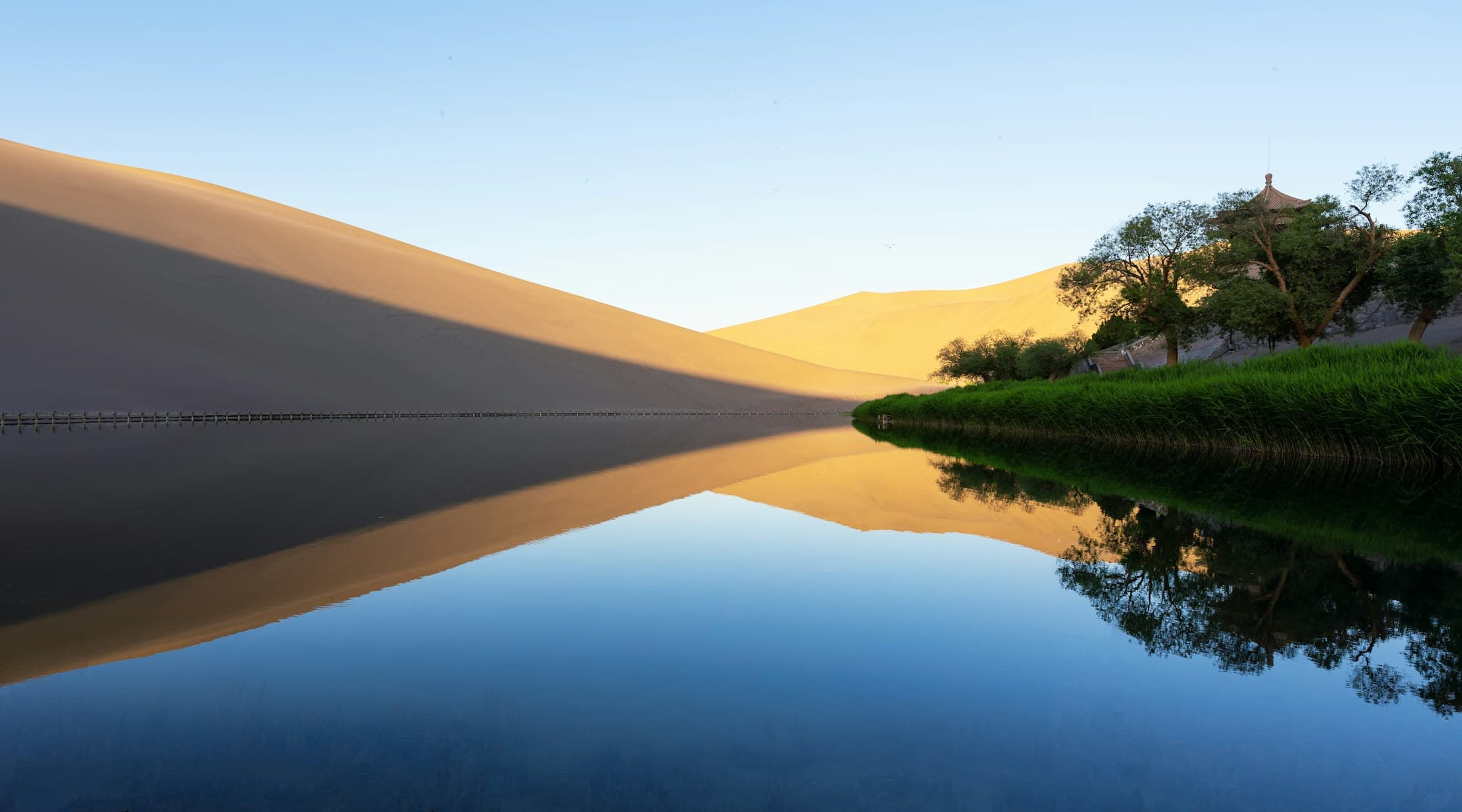
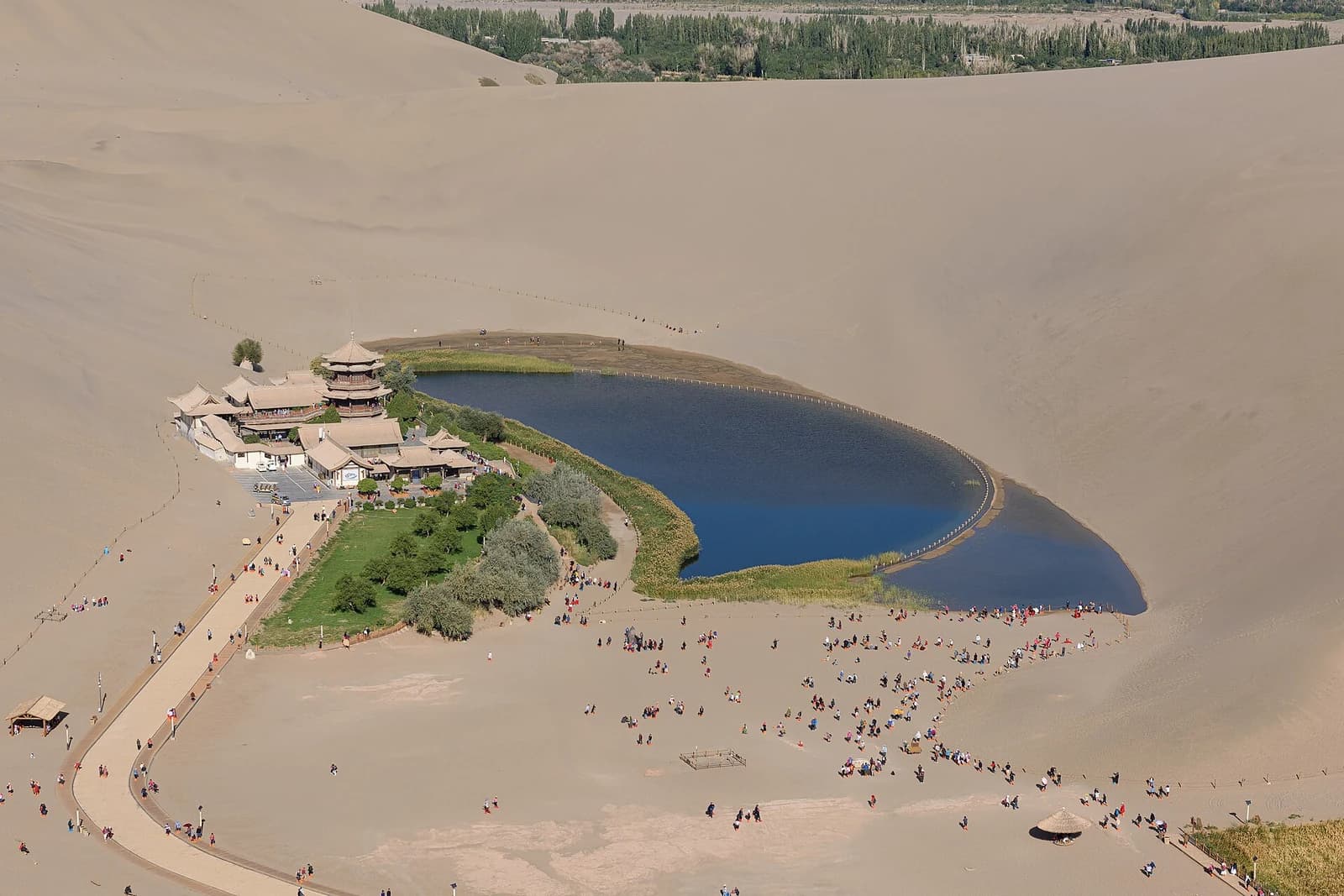
Dune ridges and the water of Crescent Lake make the meeting of desert and oasis visible.
Caption & source
Notice the edge between sand and water
The Singing Sand Dunes are part of the Mingsha Mountain–Crescent Lake scenic landscape south of Dunhuang. Sand ridges surround the crescent-shaped water, creating a close visual relationship between the desert’s sweeping forms and the much smaller scale of the oasis below.
Look first at the ridge lines, then at the slopes and the lake’s outline. A sharp crest and a smooth face catch light differently; the small buildings beside the water help show the height of the surrounding sand. These changes of scale are as revealing as a wide panorama.
Sources & photograph credits
Background and reading notes adapted from the sources below. Photographs are credited to their original authors.
- 酒泉市鸣沙山月牙泉景区
Ministry of Culture and Tourism of China · Checked
The Mingsha Mountain–Crescent Lake landscape and the coexistence of sand and water. Discussion of light, scale and ridge shapes is editorial.
Dunhuang · Earthen construction & frontier communication
Han-dynasty wall remains
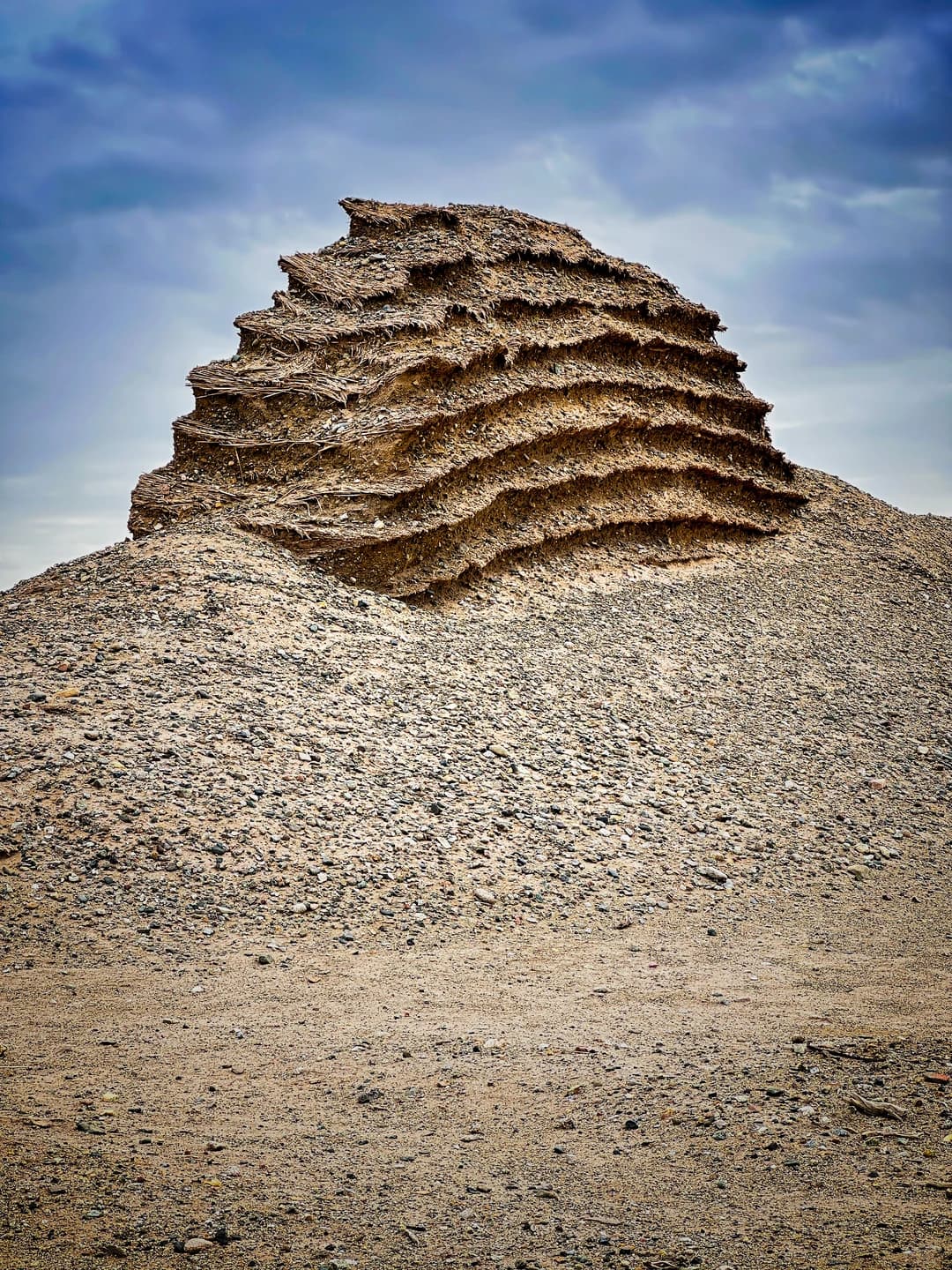
Low walls and beacon remains reveal a frontier system built from the materials of the desert landscape.
Caption & source
A wall within a wider network
The Han frontier around Dunhuang included walls, beacon towers, fortified posts and supporting stations. Builders adapted to local conditions, combining earth and sand with materials such as reeds or brushwood. Surviving fragments make that construction visible in a way that a complete stone-faced wall would not.
Look for changes of texture within the exposed wall and for the relationship between a wall line and a separate tower. The landscape helps explain why communication and supplies mattered alongside the boundary itself. These modest-looking remains preserve the working structure of a frontier rather than a single monumental building.
Sources & photograph credits
Background and reading notes adapted from the sources below. Photographs are credited to their original authors.
- 源远流长的甘肃长城文化
Silk Road (Dunhuang) International Cultural Expo — Gansu Daily · Checked
Han frontier defences as a system of walls, towers, posts and stations, with locally adapted earth and plant-based construction.
- 汉长城遗址
Dunhuang Yangguan and Yumen Pass Scenic Area · Checked
The Han wall remains within the Yumen Pass heritage landscape. Texture and spatial observation are editorial suggestions.
Dunhuang · An earthen gateway to the Silk Roads
Yumen Pass
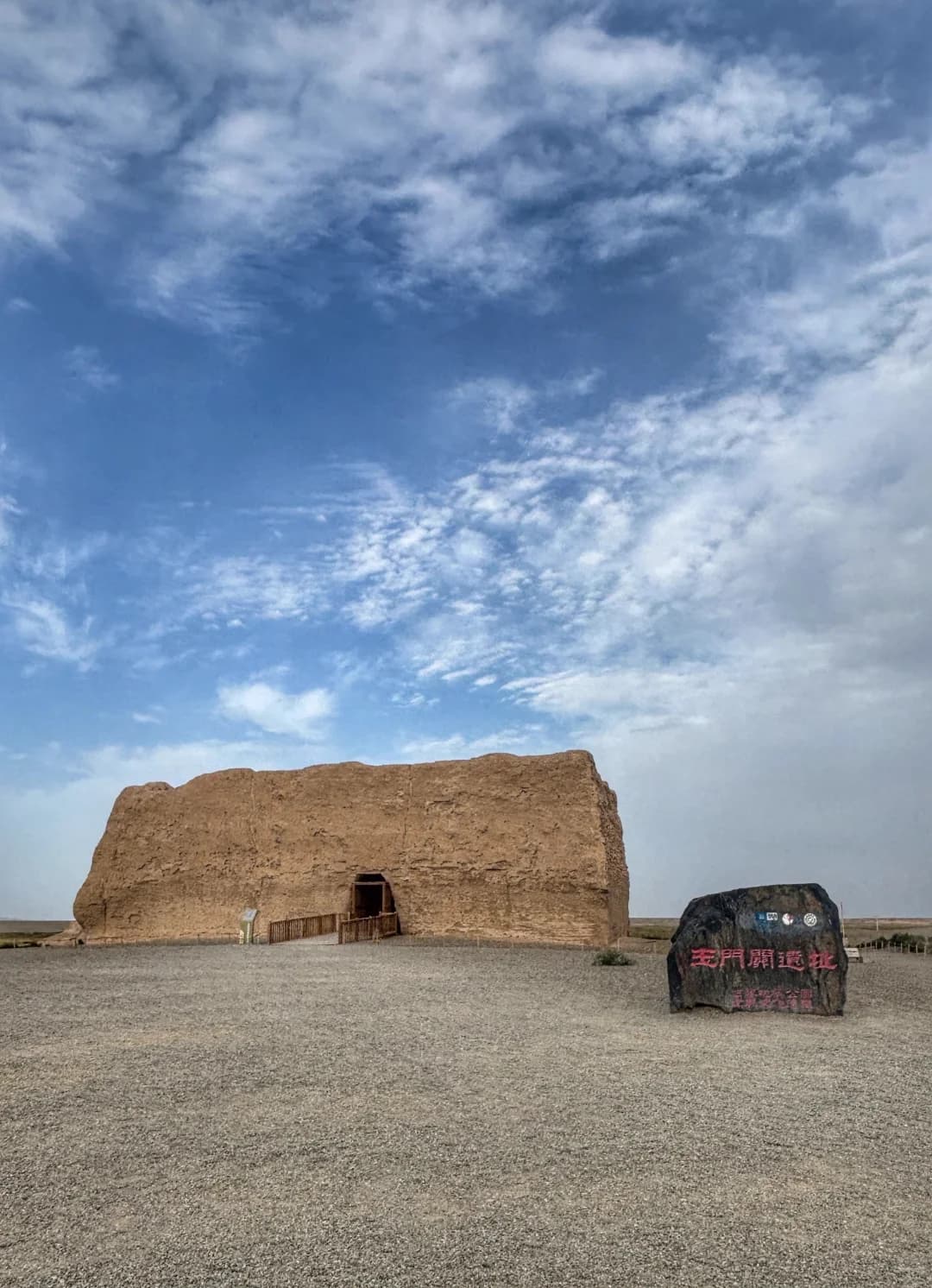
An earthen enclosure helps make the idea of a Silk Roads gateway tangible in the open desert.
Caption & source
Place the enclosure in its landscape
The Yumen Pass heritage landscape includes Xiaofangpan, the compact earthen enclosure commonly associated with the pass, alongside other frontier remains. It belongs to the Chang’an–Tianshan Corridor World Heritage property, whose components record the settlements, passages and supporting infrastructure of long-distance exchange.
Notice the thick walls and the small openings, then step back visually to consider their isolated setting. The structure’s significance lies partly in the movement it once helped regulate. The surrounding remains connect this single enclosure with a larger system of defence, storage and communication.
Sources & photograph credits
Background and reading notes adapted from the sources below. Photographs are credited to their original authors.
- 小方盘城遗址
Dunhuang Yangguan and Yumen Pass Scenic Area · Checked
Xiaofangpan’s identity, earthen enclosure and association with Yumen Pass.
- Silk Roads: the Routes Network of Chang’an-Tianshan Corridor
UNESCO World Heritage Centre · Checked
The World Heritage network of settlements, passes, beacon towers, walls and other infrastructure supporting Silk Roads exchange.
Dunhuang · Objects, documents & an oasis city
Dunhuang Museum
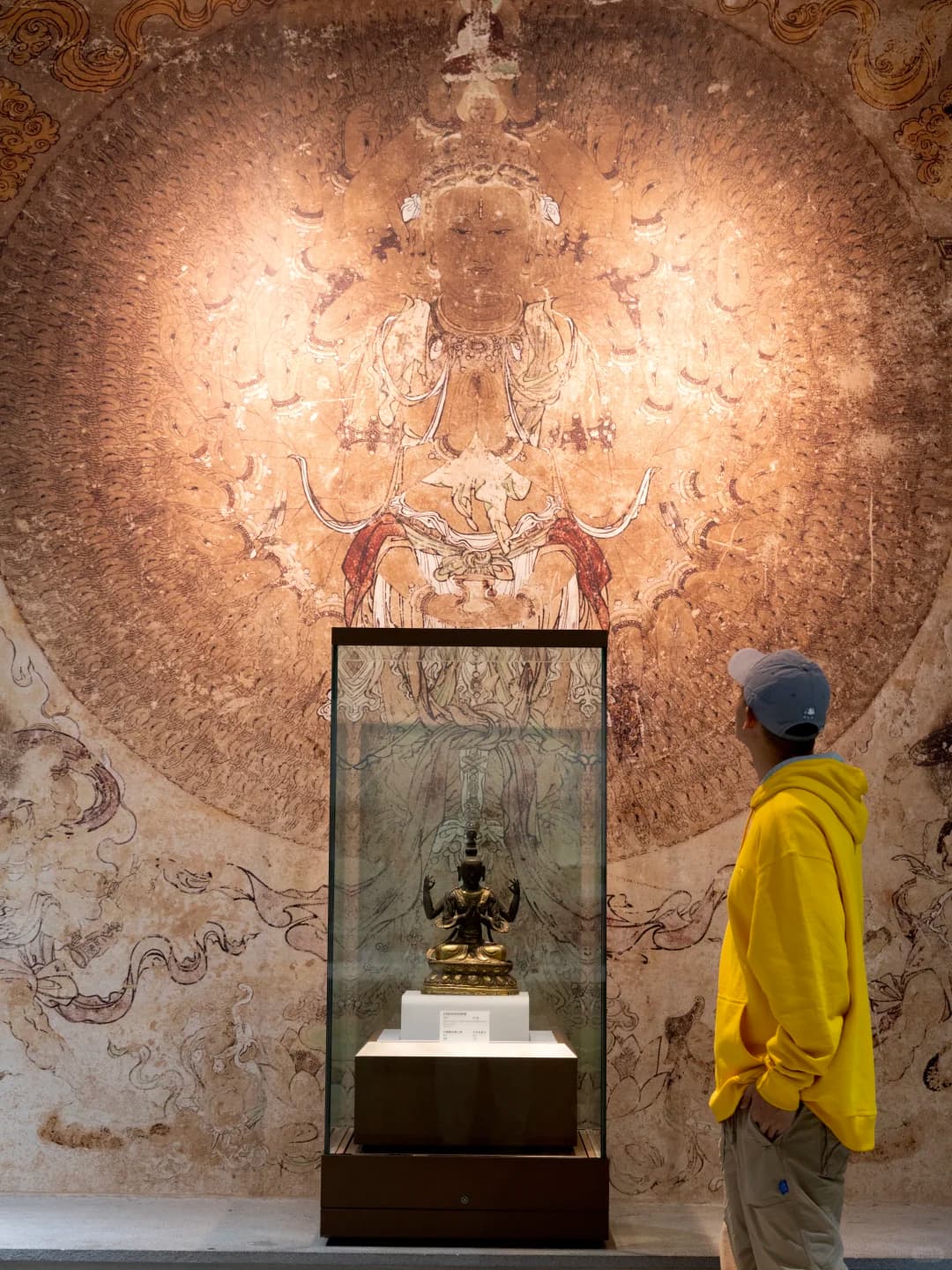
Dunhuang Museum follows the history of an oasis crossroads through excavated objects, written records and images of its religious art.
Caption & source
A city beyond the cave paintings
The museum’s permanent historical display connects Dunhuang with the Hexi Corridor and the wider Silk Road. Its sequence moves through early settlement, Han trade and administration, medieval prosperity and later changes in the oasis.
Pottery, weapons, textiles and coins bring that long history down to the scale of things people made, used and exchanged. They place the famous religious images within a city that also had households, officials and merchants.
Reading objects beside images
The museum describes both archaeological objects and photographs of manuscripts and murals in its displays. An image reproduces a surface or composition; an excavated object also carries its own material, thickness and traces of manufacture.
In the archived museum photographs, a small sculpture stands before a much larger Buddhist image. The contrast between an object in a case and an image across a wall gives two different scales for looking at religious art.
Sources & photograph credits
Background and reading notes adapted from the sources below. Photographs are credited to their original authors.
- 华戎交会的都市—敦煌历史与丝绸之路文物陈列
Dunhuang Museum · Checked
Official account of the permanent exhibition: chronological history, excavated pottery, weapons, textiles and coins, manuscript and mural imagery, and Dunhuang’s Silk Road connections.
- 敦煌会惩罚每一个不做攻略的人
Xiaohongshu · Eric的旅行碎片 · Checked
Original archived post and unchanged photograph; supports the attributed visual observations only, not general visitor satisfaction, opening arrangements or historical dating.
Dunhuang · Lanterns, food stalls & contemporary craft
Shazhou Night Market
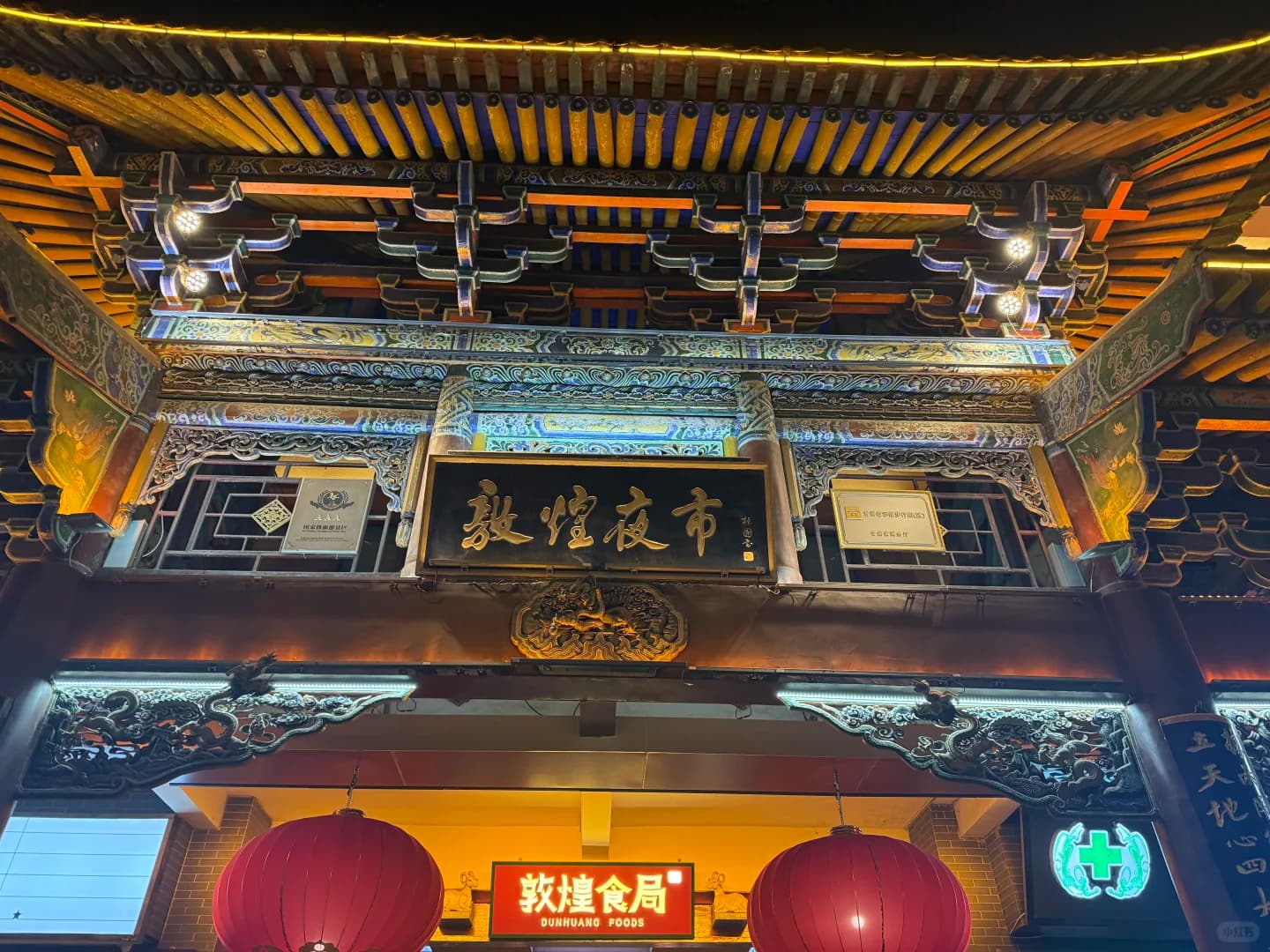
Dunhuang’s night market gathers food, handicrafts and contemporary interpretations of Silk Road imagery within a brightly lit commercial district.
Caption & source
A modern market in a historical idiom
Also called Dunhuang Night Market, Shazhou Night Market was established in 1991. It is a modern commercial district whose Han- and Tang-inspired buildings, tiled eaves and lanterns give the streets a deliberately historical setting.
The archived entrance photograph makes that design visible at close range: painted brackets overlap beneath the eaves, a gold-lettered market plaque marks the gateway, and food-business signs occupy the space below.
Food and images share the street
Food, dried produce and handicrafts share the market district. One archived travel notebook particularly enjoyed browsing small camel souvenirs and illustrated magnets, a close-up way to notice how Dunhuang's imagery appears in everyday objects.
The buildings and merchandise show how the city presents its cultural identity today. A modern lantern-lined shopfront and a newly made object belong to that contemporary street life, even when their decoration refers to a much older past.
Sources & photograph credits
Background and reading notes adapted from the sources below. Photographs are credited to their original authors.
- 敦煌夜市丨丝路美食与手作集结地
Gansu Provincial Department of Culture and Tourism · official account · Checked
Official description identifies Dunhuang/Shazhou Night Market, its 1991 establishment, food and craft uses, and Han–Tang-inspired architecture, lanterns and cultural products.
- 敦煌夜市避雷
Xiaohongshu · 梧桐树结出了坚果 · Checked
Original photograph of the illuminated market gateway. Used for visible architectural details only.
- 🚗敦煌|五天四晚甘肃游之敦煌篇
Xiaohongshu · 爱旅行的🐫 · Checked
Body-based account of evening browsing and small camel souvenirs and magnets; no current price or opening-time claims are adopted.